
The aspens are shimmering gold and we can see their quilt as we drive through the canyons now. The mornings are sharp, the wind picks up and rattles leaves across the driveway and I notice our calendar and my brain spinning. Our bodies know the season has changed before the calendar does, and I notice it in my clients before they name it. Hands a little drier. Digestion a little less predictable. A sense of being slightly untethered, like the ground moved an inch while no one was looking.
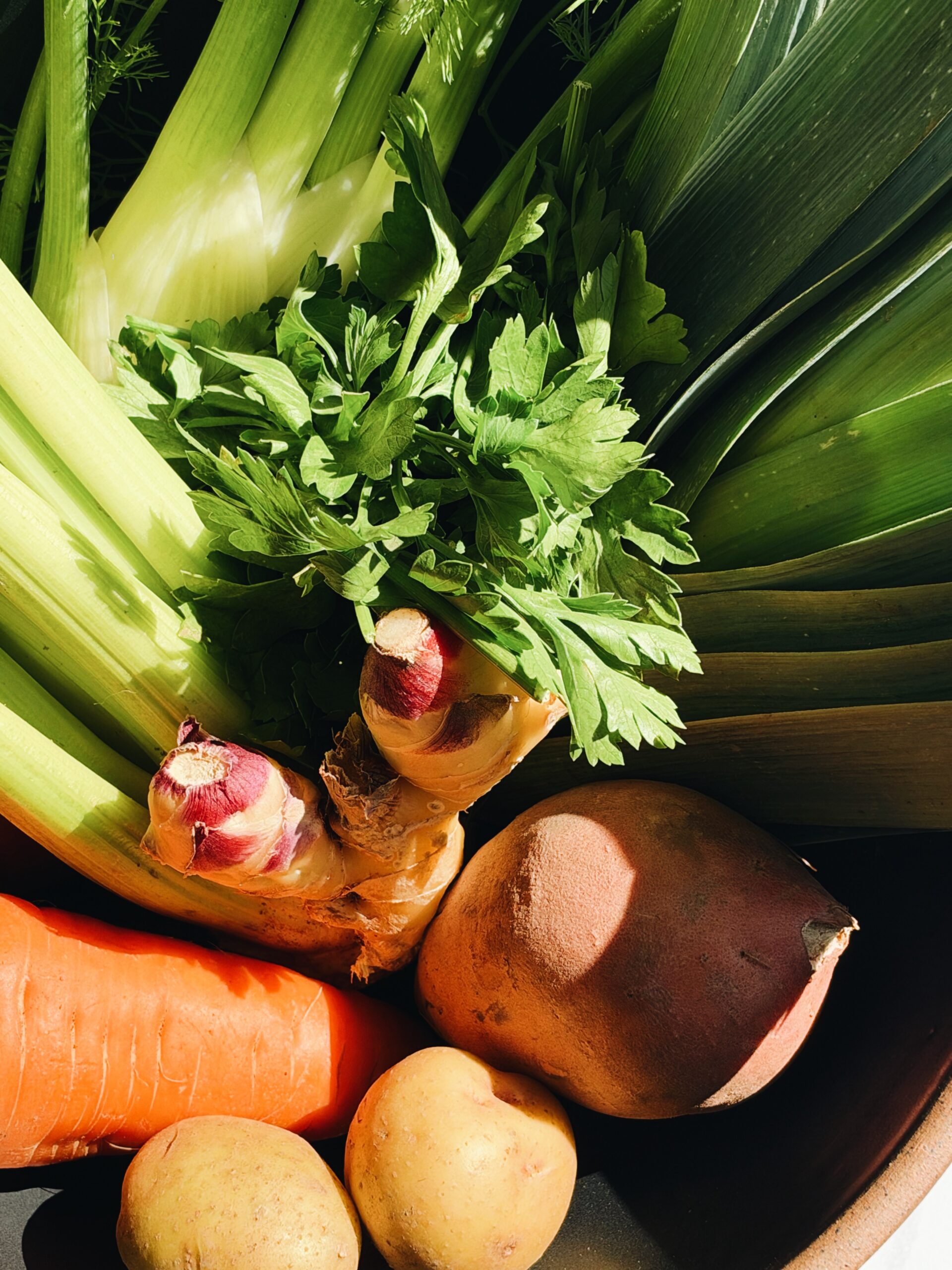
This is when I start a pot of broth and keep it going, one way or another, until spring. And this Ghee-Kissed Mineral Broth is a favorite.
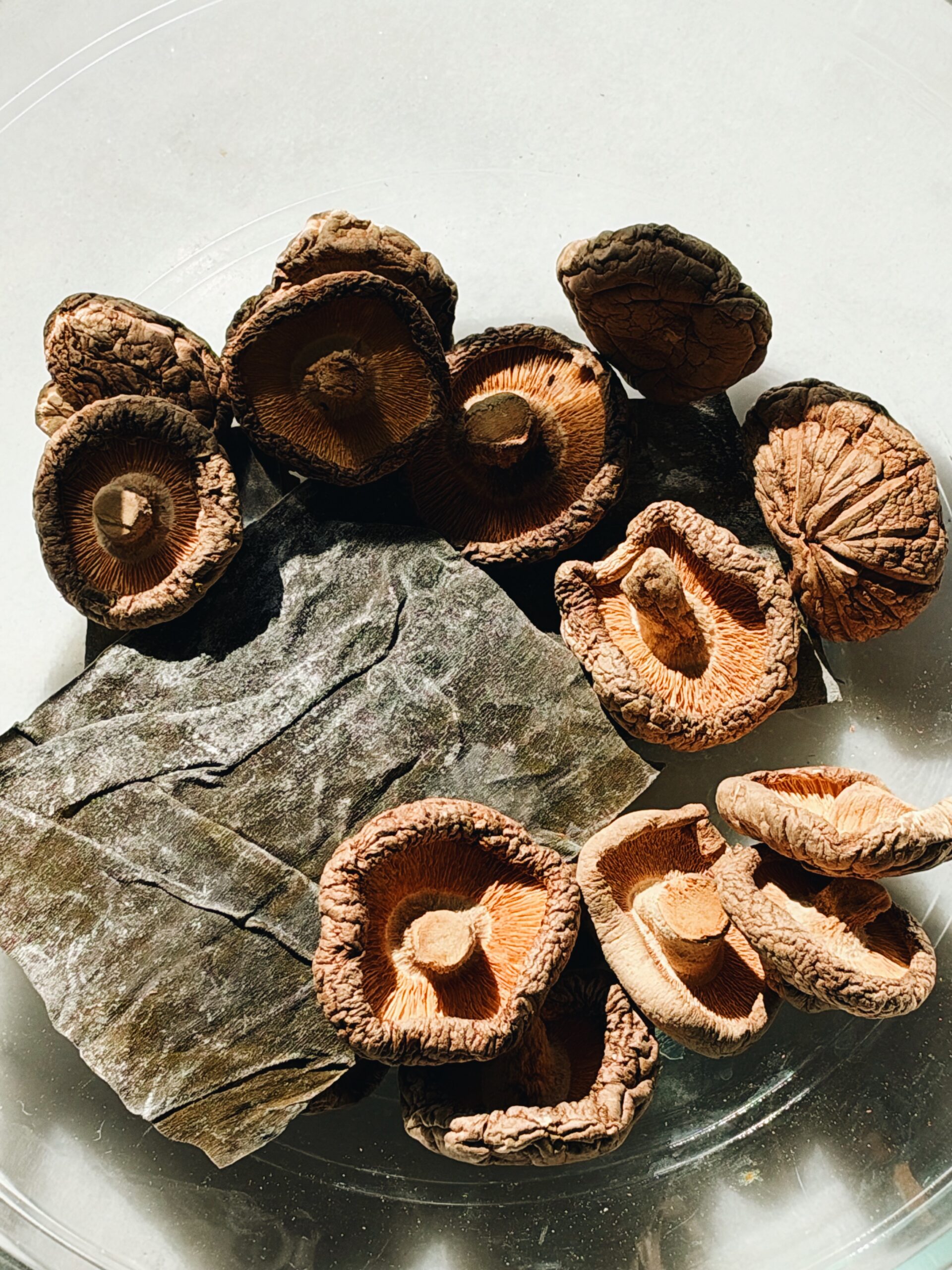
Not a fancy one. A big, humble pot of vegetables, kombu, mushrooms, and warming spices, simmered low until the kitchen smells like something is being taken care of. And then, right at the end, the part that makes it mine: a spoonful of ghee, warmed until it sizzles with spices and aromatics, drizzled over the broth. It rounds the flavor, grounds the soul and makes this truly a special thing to sip this time of year.
In Ayurveda, fall belongs to vata — the energy of air and space. It’s the force behind movement, creativity, and change, and when it’s balanced, we feel light, quick, and inspired. But vata’s qualities are dry, cold, light, rough, and mobile, and fall is made of exactly those same things. When the season and the dosha share all the same qualities, they amplify each other. Like increases like.
This is why your skin feels papery, your joints creak a little louder, your belly gets gassy or irregular, and your mind (and schedule) won’t settle at night this time of year. Nothing is wrong. You’re just picking up the weather.
The remedy, beautifully, is the opposite of what the season brings: warm instead of cold, moist instead of dry, oily instead of rough, grounded instead of scattered.
And the most direct way to bring those qualities into your body is to eat them.
This is the time of year to let go of the raw salads, cold smoothies, crackers, and iced drinks that felt so good in August. They carry exactly the qualities fall is already handing you in excess and they’ll make all that spinny dryness worse.
Instead, reach for food that is cooked, soft, a little soupy, and generously finished with good fat. Warmth supports agni — your digestive fire — which tends to flicker and become irregular when vata is high. Moisture counters the dryness that shows up in skin, colon, and joints. And healthy fats, ghee especially, are the most direct antidote to vata’s rough, dry nature. Ghee is considered deeply nourishing in Ayurveda; it carries the properties of the spices cooked into it and lubricates from the inside out.
Here’s the honest part, though: broth on its own -especially when it’s made with predominantly plants – is lean. It’s warm and wet, but it has almost no fat. That’s why this recipe doesn’t treat ghee as a garnish. The ghee is the point — bloomed with cumin and maybe a pinch of hing, then poured hot over the bowl so it pools and shimmers on top. If you want to make this a fuller vata-season meal, ladle it over a scoop of rice or kitchari, or drop in some soft-cooked greens and a little more ghee.
Broth is food that has already done much of the work for you. Long, gentle simmering draws flavor, color, and water-soluble nutrients out of the vegetables and into the liquid — so your body gets the nourishment without having to break down all that fiber first. When digestion is tired or erratic, that matters.
It’s also some of the most hydrating food there is. Dry fall air pulls moisture from us constantly, and a warm, lightly salted broth replaces fluid along with naturally occurring potassium and other minerals from the vegetables — far more satisfying than another glass of cold water.
This beautiful broth is also a lovely vehicle for potassium and magnesium, and other trace minerals an nutrients. And then there’s the part that’s harder to measure. Warm broth slows us down. You can’t gulp it. You hold the mug, you breathe the steam, you sip. For a season that’s all wind and motion, that small act of settling is medicine, too.
Hingvastak churna is a classical Ayurvedic digestive blend whose name says it all: hingu (asafoetida) plus ashtaka, “group of eight.” It brings together hing, dry ginger, black pepper, long pepper (pippali), ajwain, cumin, black cumin, and mineral-rich rock salt in roughly equal parts.
On its own, hing (asofoetida) is intense; folded into this formula, it becomes one balanced note among eight. Together they kindle a sluggish digestive fire, ease gas and bloating, and help move trapped air downward and out — which is exactly why it has been a go-to for vata-season bellies for centuries.
Traditionally, it’s mixed into ghee and taken with the first few bites of a meal, so a broth finished with crackle ghee is a natural home for it: stir ⅛–¼ teaspoon into your spoonful of ghee before it goes over the bowl. Start small. It’s warming and savory-salty, a little goes a long way, and if you run hot, a pinch is plenty.
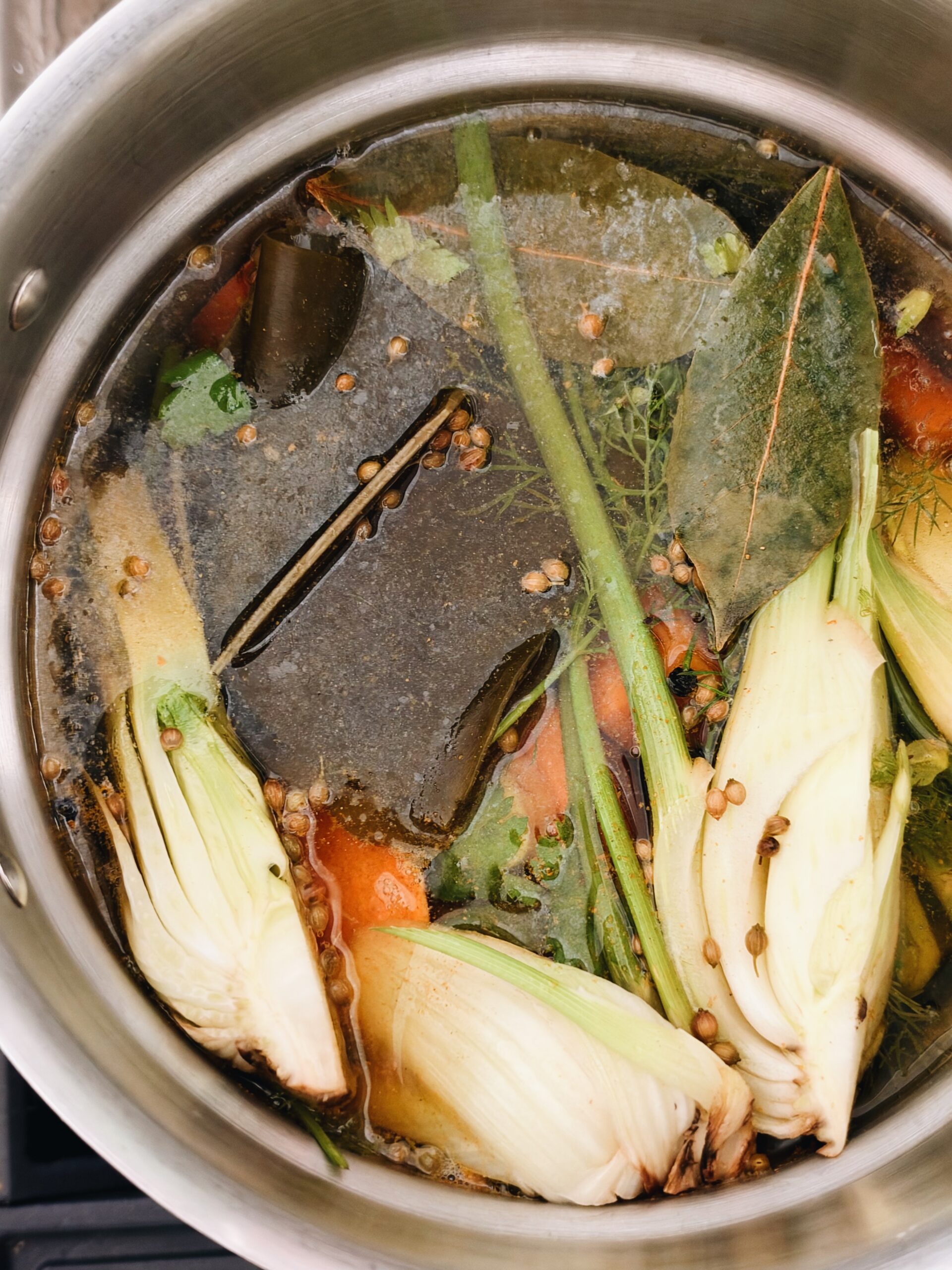
…is beautiful sipped on it’s own, or used in a soup, stew or congee. I typically love it as a warmer on a chilly afternoon, or with my lunch as a warm bevy. It’s easy to make, and calls on all of the late fall bounty to come together. It’s the kind of thing that makes us feel well cared for, even when the day, the world, the wind feels harsh.
Don’t be overwhelmed by the ingredient list – I promise that most of these things you have already, and if you don’t the show will go on without it.
The ghee is – as previously stated – completely non-negotiable. Whether you make the sizzly, fragrant tadka or the Crunchy Crackle Ghee, do not sleep on this generous addition.
This broth is divine. It’s gentle, and nourishing, and a wonderful pantry staple that I hope becomes part of your fall rotation too.
That's ok, just sign up or log in to see this recipe.