
I’m just home from a week of cooking for the incredible Hoka athletes racing the Western States 100 ultra-trail race next weekend and I’m beaming.
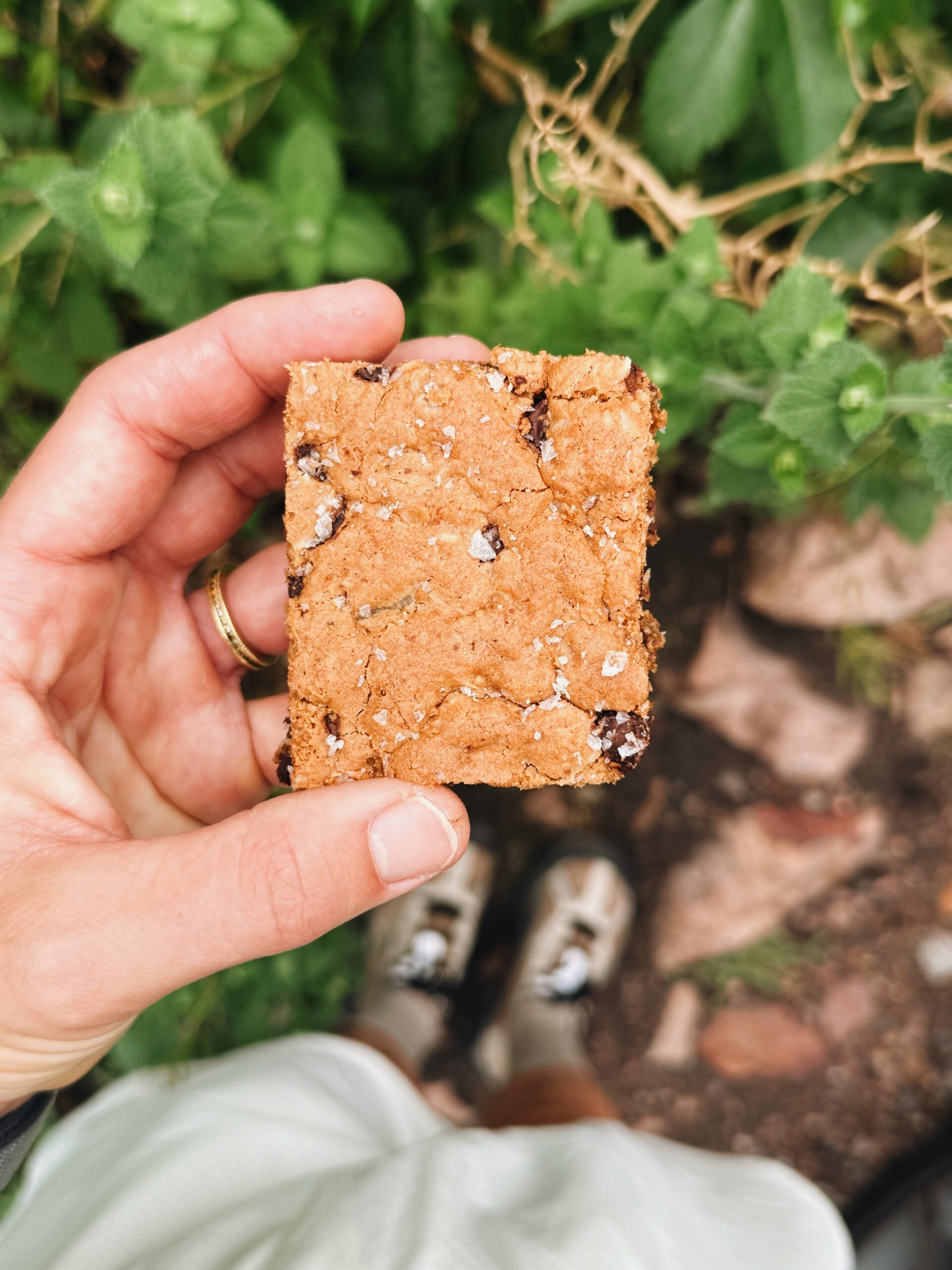
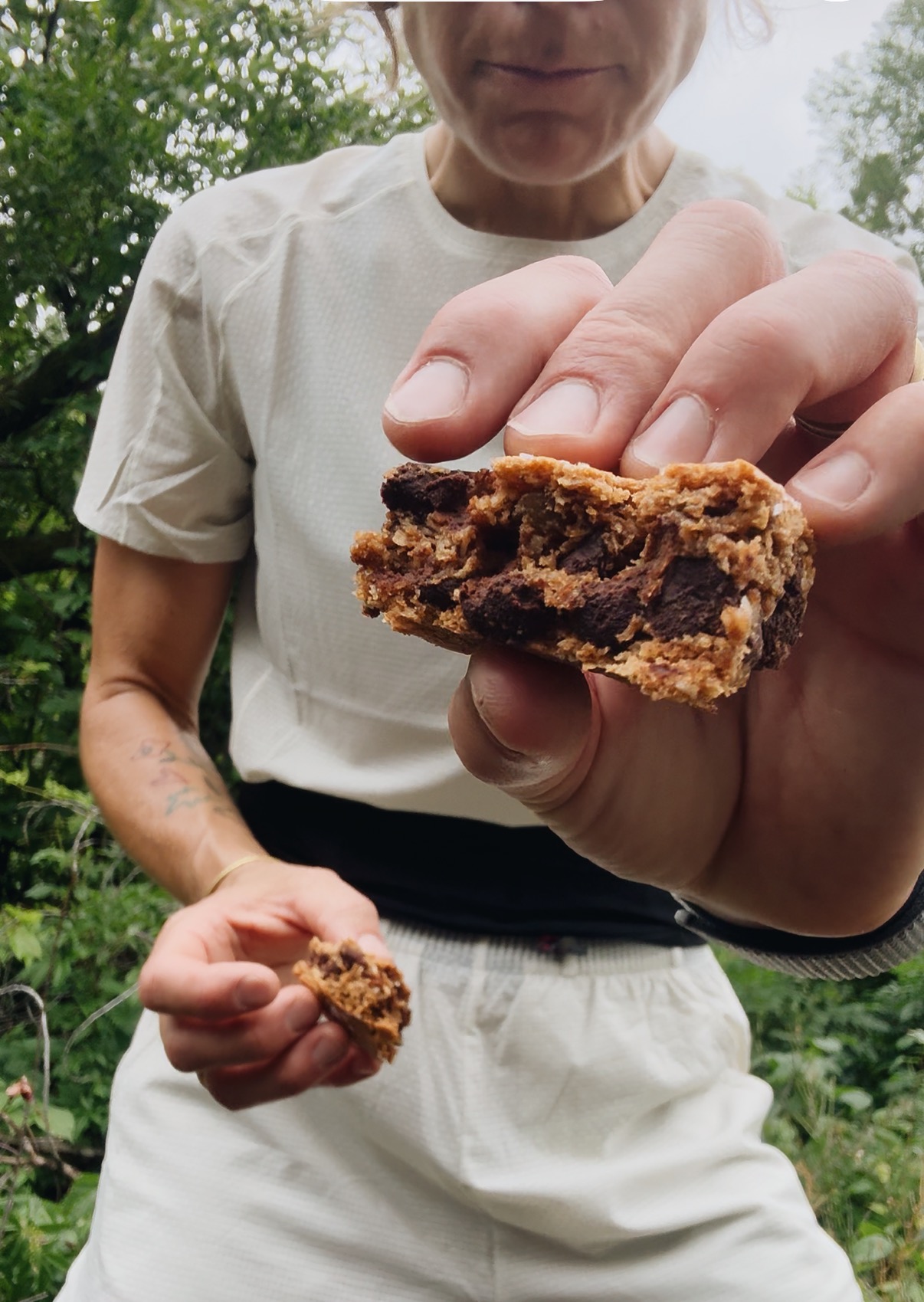
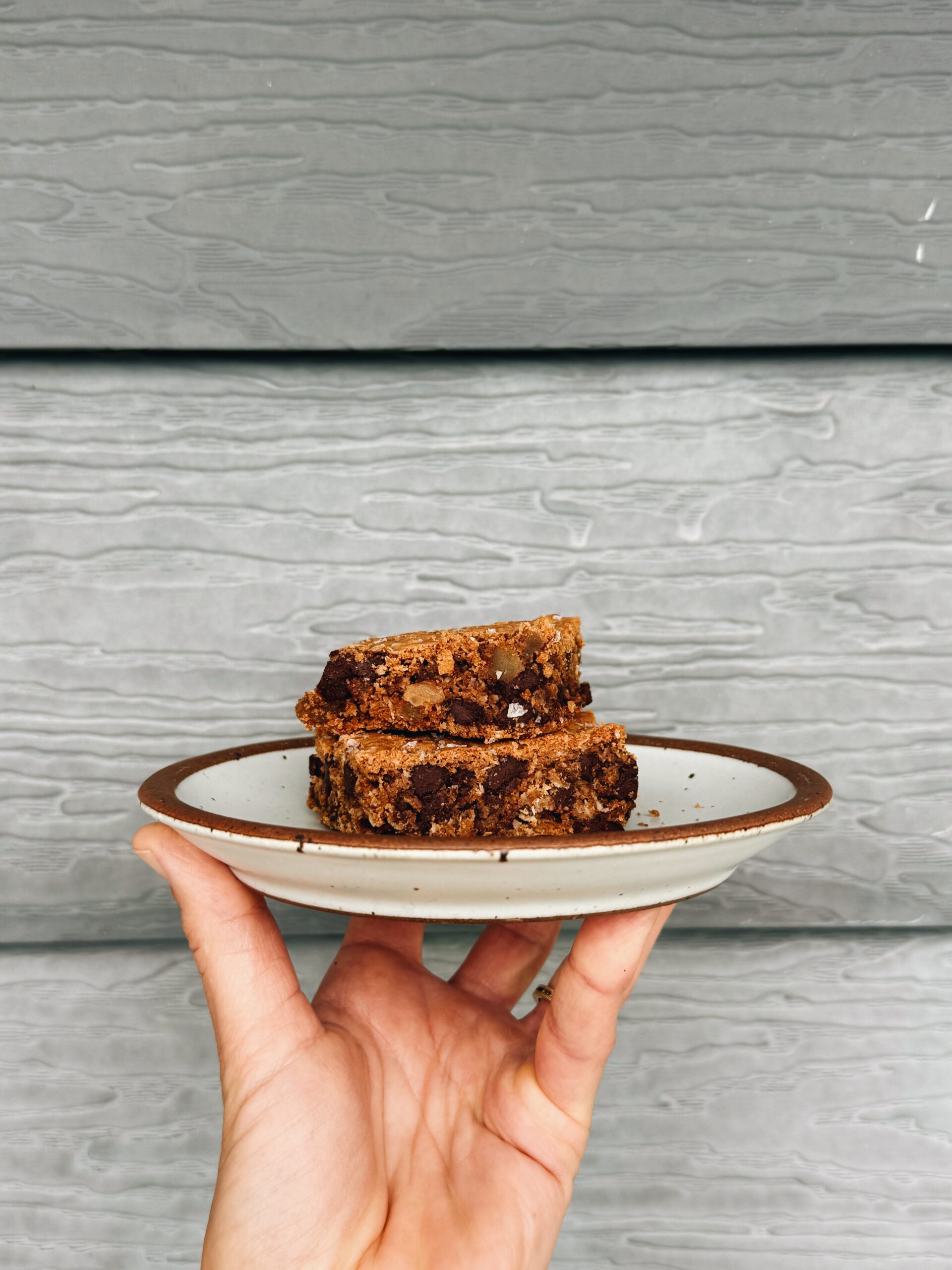
My job for the week was to fuel their final training efforts ahead of the race, to boost morale, to help them stay finely tuned, and top them off with delicious goodness that will power performances worthy of their hard work. And it was here, in my Olympic Valley kitchen that the undeniable, Chewiest Chunky Chocolate + Ginger Cookie Bars were born. I served them up one afternoon, when the runners were all home from their training days. They kept “just passing by” and taking a cookie as they went. The stack was gone in a heartbeat.
Training for an ultra-marathon is not polite. It needs gels and chews, but that’s not what you really want to be eating. It’s not polite. It doesn’t want a gel or a chew or anything that comes in a foil packet, but it does need that thing. And so, when the training is over, these runners and their efforts want something real — something chewy and substantial and deeply satisfying, full of love and flavor and power.
These bars are that thing.
Before we talk about the cookie, we need to talk about the gut that’s going to eat it.
Most endurance athletes — and honestly, most people who train consistently — are walking around with digestive systems that are quietly exhausted. Not broken, not diseased, just chronically taxed. Here’s why: every time you run, your body redirects blood flow away from your digestive organs and toward your working muscles. That’s efficient and appropriate. But when it happens day after day, mile after mile, your gut starts to adapt to operating in a state of reduced support. It becomes, over time, less resilient. Less able to handle the curveballs — the unfamiliar food, the race-morning nerves, the gel you’ve had a hundred times that suddenly doesn’t sit right at mile 18.
Add to that the reality of what most athletes are actually eating between training sessions: ultraprocessed bars, convenience foods engineered for shelf life rather than digestibility, meals grabbed on the go between workouts and work and everything else. The gut never really gets to rest. Agni — the Ayurvedic concept of digestive fire — gets depleted not from one bad meal but from the accumulated weight of never quite recovering.
And then there are the nerves. Pre-race anxiety is real and physiological — it activates your sympathetic nervous system, which directly suppresses digestion. The stomach cramps, the urgent bathroom trips, the sudden intolerance for foods you eat without issue on a regular Tuesday — that’s not weakness or bad luck. That’s a nervous system doing exactly what it’s designed to do, at exactly the wrong moment.
Gluten and dairy are two of the most common triggers in this already-compromised state. Not because they’re inherently harmful, but because they require real digestive capacity to break down well — capacity that’s already stretched thin. When the gut is taxed and the nervous system is activated, gluten and dairy are often the first things to become a problem.
Which is why the foundation of this recipe matters.
Removing gluten and dairy from a training food isn’t a wellness trend. It’s a practical decision rooted in how digestion actually behaves under stress.
Gluten requires significant enzymatic work to break down. For athletes whose digestive systems are already running lean — depleted agni, reduced blood flow to the gut, nervous system in a low-grade state of activation — that work becomes a burden. The result, for many, is bloating, heaviness, and the kind of GI distress that derails training and racing.
Dairy, particularly conventional dairy, adds a fat and protein combination that slows gastric emptying and can trigger inflammatory responses in people who are already in a state of physiological stress. Even athletes who tolerate dairy well under normal conditions often find it becomes a problem in the lead-up to and during hard efforts.
These bars use GF all-purpose flour and coconut oil in place of both. The result is a cookie that’s lighter on the digestive system without being light on flavor or satisfaction.
Most training foods are dry. Bars, crackers, chews, gels — they’re engineered for shelf stability and portability, not for a body that’s dehydrated and working hard to maintain fluid balance.
Moist, yielding foods are easier on the gut during effort. They require less digestive work, move more readily through a system that’s already under stress, and support the kind of absorption you need when your body is asking for available fuel fast. These bars are intentionally not overbaked. The center stays slightly soft, the texture stays chewy. That’s not an aesthetic preference — it’s function.
The coconut oil base contributes to this. Medium-chain triglycerides, the predominant fat in coconut oil, metabolize differently than long-chain fats — more direct, more available, with less digestive overhead during activity. The fat is doing something here beyond keeping the bars from crumbling.
Ginger has been central to Ayurvedic food medicine for thousands of years as a digestive ally. Its active compounds support gastric motility — the rhythmic movement that keeps food progressing through the digestive tract. During sustained effort, when that motility naturally slows, ginger’s warming qualities are genuinely useful.
Using crystallized ginger in rough chunks rather than ground powder means you get waves of that effect as you eat, rather than a diffuse background note. Ground ginger in the dough adds baseline warmth. The chunks add punctuation.
Real dark chocolate — 60–70% cacao — brings magnesium, antioxidants, and a bitterness that Ayurveda recognizes as one of the six essential rasas. Bitter taste is anti-inflammatory and pacifying to the heat and inflammation that accumulates during hard training. The chocolate chips here aren’t a concession to palatability. They’re earning their place.
This recipe uses coconut sugar in place of conventional brown sugar — a meaningful swap. Coconut sugar has a lower glycemic index than refined sugar and carries a natural caramel depth that means the sweetness reads richer than the quantity suggests. Combined with a small amount of granulated sugar for structure, the total per bar is modest, and the flavor is primarily coming from the toasted coconut, dark chocolate, ginger, and flaky salt — not the sugar itself.
…are all of that, but they’re also DAMN GOOD.
You only need a single bowl to make them, they come together quickly and deserve your next adventure. More notes on how to make these your own in the Recipe Notes below!
I can’t wait to hear where you take these, how they serve you, and how thinking – and looking – at sports nutrition from a functional and delicious perspective helps you to blast boundaries out there. : )
That's ok, just sign up or log in to see this recipe.