
There’s a version of “sippable wellness” that comes in a tin — pre-blended, shipped from somewhere, dried months before it reached the shelf, priced like it’s rare. It isn’t rare. It’s the opposite of rare.
Right now, in the middle of summer, the plants that make the best tea are doing exactly what they do every year at exactly this time: converting months of sun into the oils, the aroma, the brightness that we’re actually drinking for. The leafy, aromatic herbs — the ones that end up in a cup rather than a jar of dried spice — hit their peak right now. Nature isn’t holding out on us. It handed over the good stuff on schedule, the same way it always does, and the only real luxury is noticing. Which is why it’s very helpful to know how to make a batch of Summer Garden Tea
If you remember one thing from this recipe – whether you make it or not – the fancy tea blend isn’t the luxury. The luxury is walking outside with scissors, cutting what’s bursting from the ground and ready, putting it in a jar, or a mug, with water, and sipping in it’s superpowers 10 minutes, later while the vibrancy of the oils are still doing what they do when they’re alive. This kind of timing, potency and perfection aren’t for sale. Fresh tea, made this way, isn’t a lesser or more rustic version of the tin — it’s the original the tin is trying to imitate, and it was never for sale to begin with.
Making tea fresh from the garden is one of the most simple self-care practices of summer. Taking good care of ourselves and connecting with nature doesn’t have to be more effortful. Sometimes it’s cutting a few leaves, pouring hot water over them, and sitting still for the ten minutes it takes to steep.
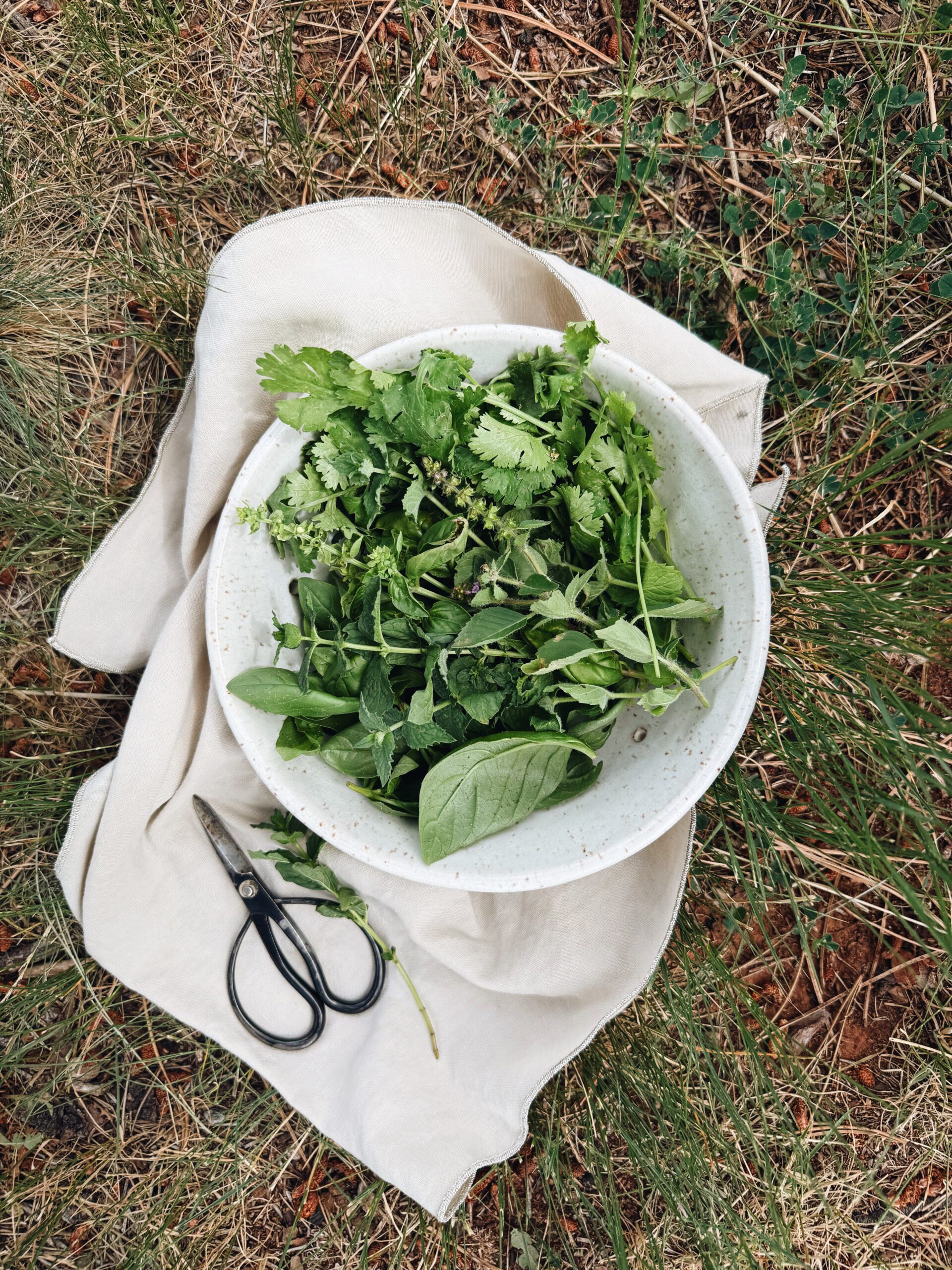
Every aromatic herb – mint, basil, tulsi, chamomile, sage, thyme, cilantro – owes its identity to volatile essential oils — the compounds responsible for mint smelling like mint, basil like basil. “Volatile” is the operative word: these oils are chemically built to evaporate. That’s their whole function in the plant, attracting pollinators, deterring pests, and it’s exactly why they don’t survive well once the leaf is cut, dried, and shelved. Drying doesn’t preserve an herb so much as it slows the loss — heat, light, and time keep working on those oils in the jar the same way they were always going to, just more gradually. A dried herb a year past harvest still smells like something, but it’s a faded photocopy of what it was the day it was cut.
With fresh herbs, the story is different. Brush up against a mint leaf along the creek, or bruise it straight off the plant and the scent of the oil hits you – long before your water kettle can boil. That’s not a metaphor, it’s the compound doing exactly what it’s built to do, at full strength, in real time. In Ayurvedic terms this is often described as prana, the life force still animating the plant — present in something freshly cut, diminished in something that’s been sitting in a bag for months. You don’t need the Ayurvedic framing to notice the difference; steep a fresh mint leaf next to a year-old tea bag and the gap speaks for itself.
There’s a slower point underneath the chemistry, too. The ritual of stepping outside, cutting exactly what you need, bruising it, and waiting for it to steep is itself part of the medicine — not just what’s dissolved in the water. Freshness asks you to slow down in a way a cabinet full of pre-blended fancy tins never will. This is what luxury and riches really are.
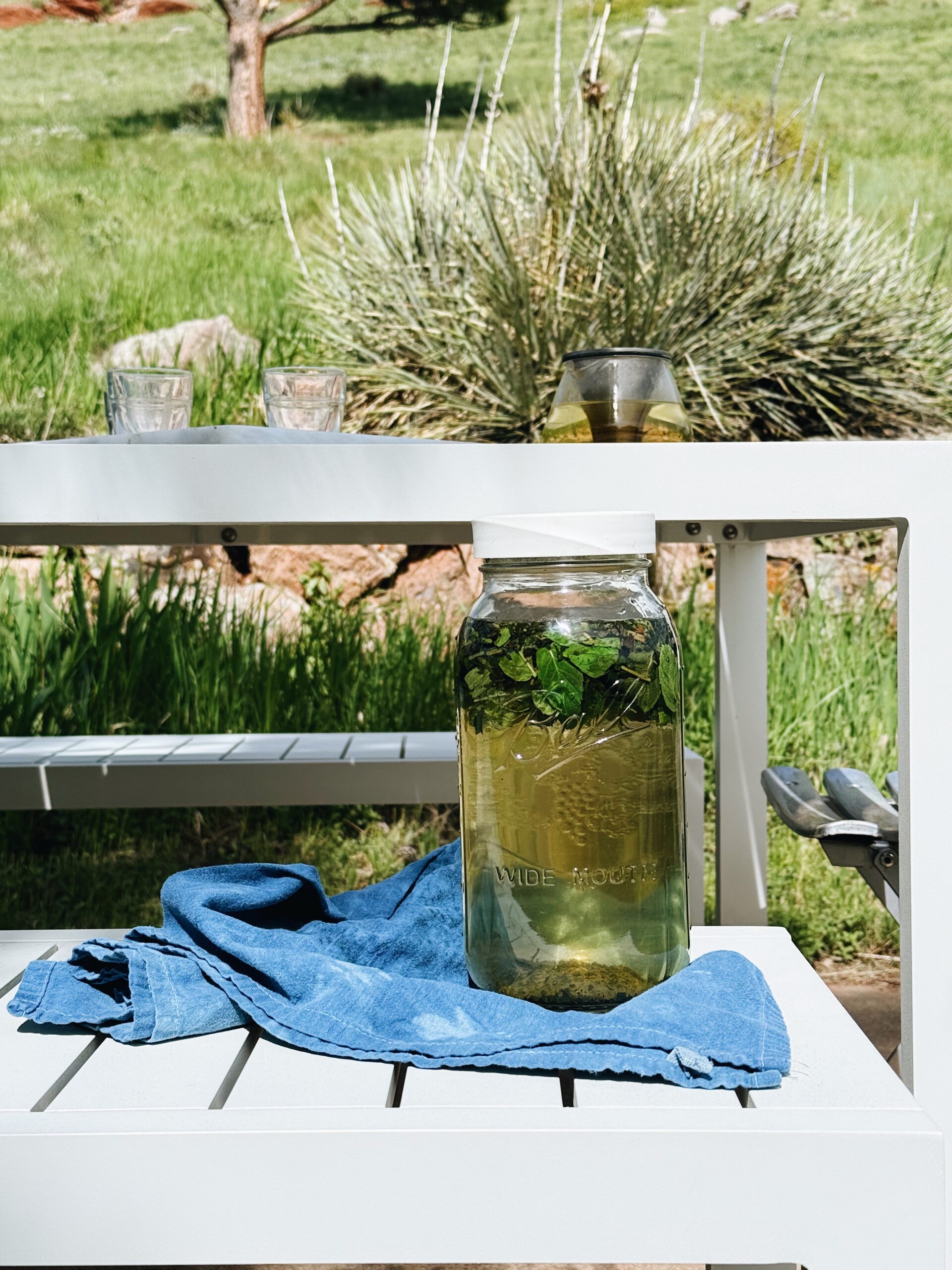
It’s challenging to grow vegetables, flowers and fruits in our arid soil here in the canyon, but I have a prolific little container of herbs that I call the tea garden….for this purpose. I cut them fresh and mix/match them to make my own fresh teas. Here are a few of the things I love to grow there and their purposes/qualities – they all mix, match and go together. Some of my favorite teas are made with these:
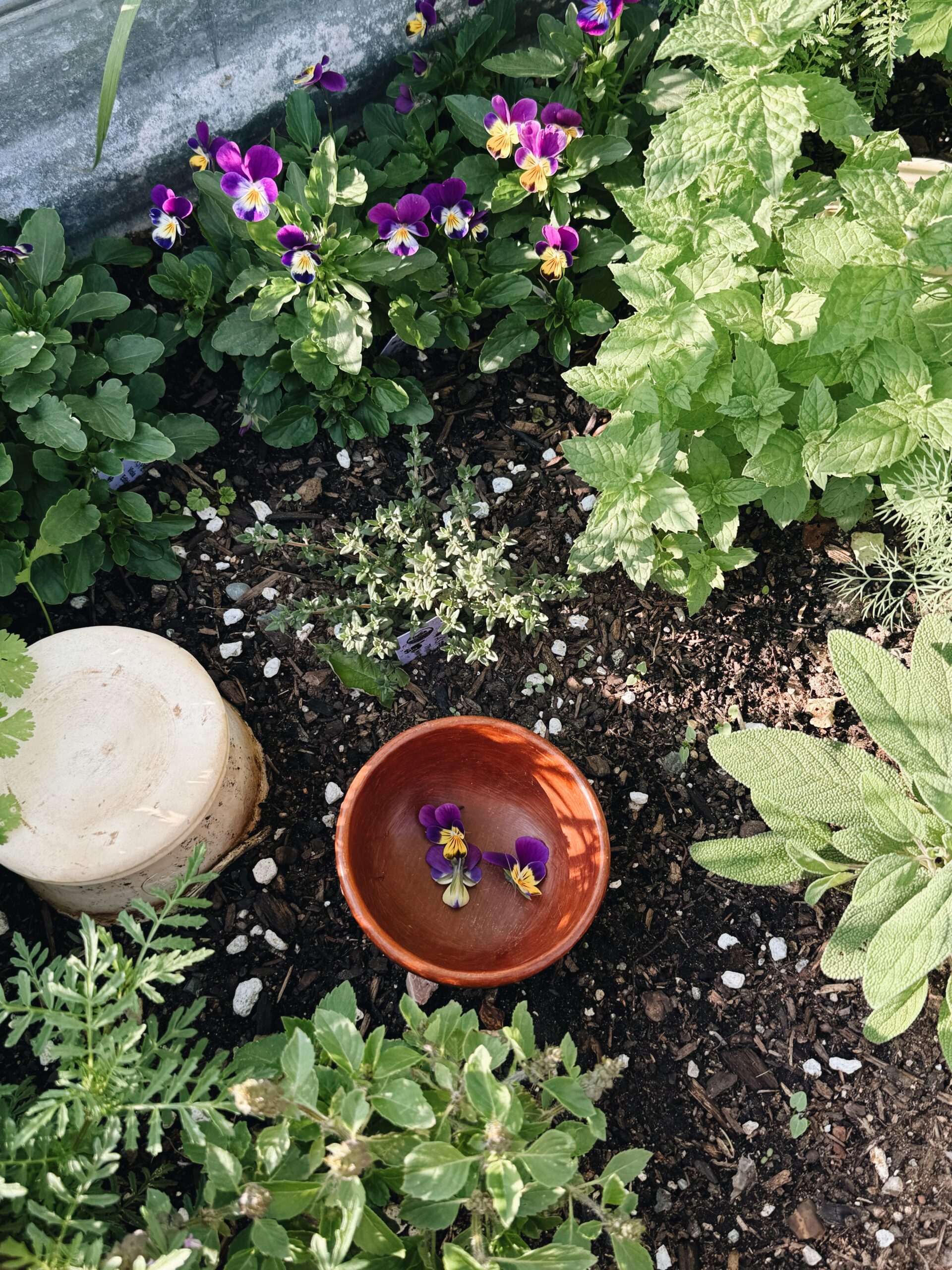
There’s a culinary idiom: “what grows together goes together” and that certainly applies to making your own fresh teas with summer herbs.
This — building a tea blend on the spot from whatever’s thriving in the garden that week — is genuinely my favorite way to make tea all summer. Not a recipe I follow, but a small daily decision: what’s growing, what does my body want today, what am I in the mood to taste.
The method is simpler than it sounds. Start with one anchor herb that matches what you need — mint or cilantro if you’re running hot, tulsi or thyme if you need warmth and clarity, chamomile if the day itself needs slowing down. Add one aromatic in a smaller amount to round it out — lemongrass, a few basil leaves, a little sage — something that adds a top note without taking over. Bruise everything gently, steep off the boil for eight to ten minutes, strain, and only sweeten ( I like to use honey here) once it’s fully cooled, since honey stops being honey the moment it meets real heat. That’s it.
That’s the whole method, and it changes a little every time depending on what’s actually ready to be cut.
I’ve shared a couple of my favorite blends below — one built around mint and fennel, one that uses tulsi more carefully, in moderation, so it works in pitta season instead of against it. But the real invitation is to treat those as a starting point, not the ceiling. The garden changes week to week. The blend should too.
Pitta is already hot, sharp, and a little too efficient — the goal with food and drink in pitta season isn’t just “cooling,” it’s cooling in the specific Ayurvedic sense: herbs with a sweet, bitter, or astringent rasa (flavor) and a cooling virya (digestive impact.) Mint and fennel both qualify. Basil, ginger, and tulsi don’t — all three are pungent (katu) and heating, which is why a “fresh herb tea” made on instinct can just as easily aggravate pitta as soothe it depending on what’s in the cup.
Tulsi is the trickier case, because it’s so associated with wellness that people assume it’s automatically balancing. It isn’t, for pitta — Krishna tulsi especially runs hot. Rama tulsi is milder, and in a small enough dose relative to mint and fennel, most bodies tolerate it fine in pitta season. That’s a moderation call, not a contraindication — worth naming plainly in the copy so readers with more reactive pitta (skin, acid, temper) know to leave it out rather than assume every tulsi tea is safe by default.
The other piece people miss is temperature. Iced anything feels like the obvious pitta move, but classical texts are more cautious about extreme cold than modern wellness content tends to be — cold in excess can dull agni, the digestive fire, which pitta types actually have in good supply and don’t want to suppress. Cool, not frozen, is the more accurate read.
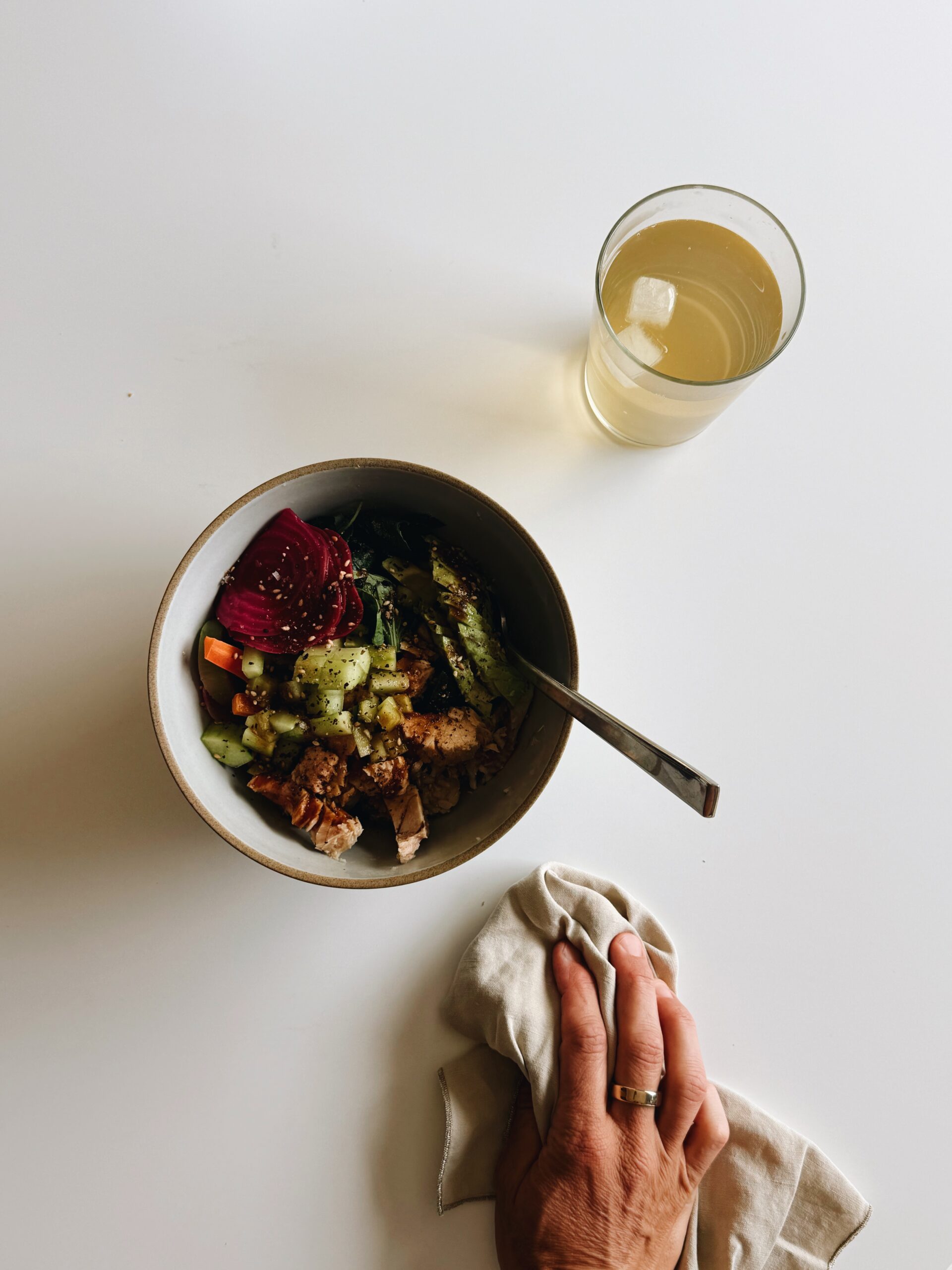
Is beautiful, romantic, makes every sip feel special and precious – and in some ways it is!
I’ve shared two recipes for favorite summer blends below that serve pitta and warmer weather. Make them, or design your own!
The tulsi blend deserves special explanation. Fresh tulsi (holy basil) is warming, not cooling — it doesn’t belong in a pitta blend by the same logic that keeps ginger and straight basil out. Used sparingly, though, and heavily outweighed by mint and fennel, it’s workable for most people in pitta season: the cooling herbs buffer the heat rather than cancel it. If you have a choice of plant, reach for Rama (green) tulsi over Krishna (purple) — Krishna runs hotter. This is a “kept in check” blend, not a core cooling one, and it’s worth labeling that way rather than calling it pitta-soothing outright. If you’re making this for someone with strong pitta symptoms (acid reflux, skin flare, short temper in the heat), skip the tulsi that day and default to mint + fennel variation instead.
And it’s also fool proof to make. Fresh-herb tea comes down to three moves: bruise, steep, strain. Bruising the leaves (a light press with the back of a spoon, not a full muddle) opens the cell walls so the oils release into hot water without turning bitter. Steep off the boil — water that’s just come off a rolling boil scalds delicate leaves and flattens the flavor into something grassy rather than bright. And strain promptly; herbs left sitting in the liquid past 10–15 minutes start tasting like lawn clippings!
I can’t wait to see your glass jars with fresh herbs floating, and to hear what you make with this simple luxury — steeping in summer.
That's ok, just sign up or log in to see this recipe.