It’s high time that I share this Magic Trick Ginger Tea because it’s one of the most highly recommended recipes in my practice, frequently used recipes in my kitchen…and there are few things it can’t fix. And now, it’s here for everyone!
The recipe is magic, but it’s not really that mysterious – boil water, add ginger powder, and you’re done.
It sounds almost too simple to be worth writing about. But simplicity is the point. Ayurveda has leaned on ginger (shunthi translates to dry ginger in Sanskrit) for thousands of years because it works across so many conditions, constitutions, and complaints. It’s the one thing I feel comfortable recommending to nearly everyone, nearly all the time for big issues and small ones.

Ok tell me more about this “magic”
Dried ginger is one of Ayurveda’s most celebrated digestive herbs. It kindles agni — your digestive fire — which is the foundation of good health in this system. When agni is strong, you digest food well, absorb nutrients, and clear ama (the sticky metabolic residue that builds up when digestion is sluggish). This ginger tea is one of the most direct, easy and gentle ways to tend that fire. I’ve prescribed this tea to clients struggling with a myriad of digestive disorders – not just to relieve them but to CLEAR them for good.
Here’s where it shows up in my practice:
- Sluggish digestion. So you decided to go out for spicy, loaded burritos? Had a late night decadent ice cream feast? Indulged in a fat slice of chocolate cake for your birthday? I am CERTAIN that these blessed events felt good in the moment…but they’re not going to feel so great later. Chances are your abdomen will feel heavy or like food is just sitting there? It is. Ginger tea before or after eating heavier, indulgent or difficult to digest foods helps stimulate digestive secretions and gets things moving. Whenever we go out for burgers, I take a little thermos of this tea and sip it in the car (or even in the restaurant!) This is its most common use — and its most immediate one.
- Nausea. Whether it’s morning sickness, motion sickness, or just an unsettled stomach, ginger is one of the most effective and well-researched natural remedies for nausea. A cup sipped slowly can offer real relief within minutes.
- Colds, congestion, and respiratory crud. Ginger is warming, drying, and slightly pungent — all qualities that help cut through kapha congestion (which is the culprit whether you have allergies, a common cold, or a serious respiratory infection). Drinking it hot (and often) when you feel something coming on or are fighting something off is one of the best things you can do. Add lemon and you’ve basically got the Ayurvedic version of DayQuil. A diluted version of this tea even works for little people, especially if you add honey (see below!)
- Sluggish circulation and cold extremities. If you’re the person who’s always cold, always reaching for socks, always warming your hands on your mug — ginger tea is genuinely helpful. Its warming quality moves circulation outward and wakes up the periphery. Many clients *think* they have Renauds Syndrome (with chronically cold hands and feet) until they drink this tea and realize it was all just digestion!
- Menstrual discomfort. Ginger has antispasmodic and anti-inflammatory properties that can ease cramping and help with flow that feels stuck or sluggish. Not to mention that drinking this tea will generally improve your overall gut health, which will decrease and eventually eliminate your menstrual symptoms all together! I recommend it in the days leading up to and through menstruation.
- Post-travel or post-overindulgence reset. Long flights, big meals, late nights — all of these tax agni. A few cups of ginger tea is often the fastest way to come back to baseline. Plus ginger powder is E A S Y to travel with!
Amp it up
Ginger tea (as written below) is enough to cure all the things that ail you above, and even more. But, we can amp up the magic with a couple of specific additions:
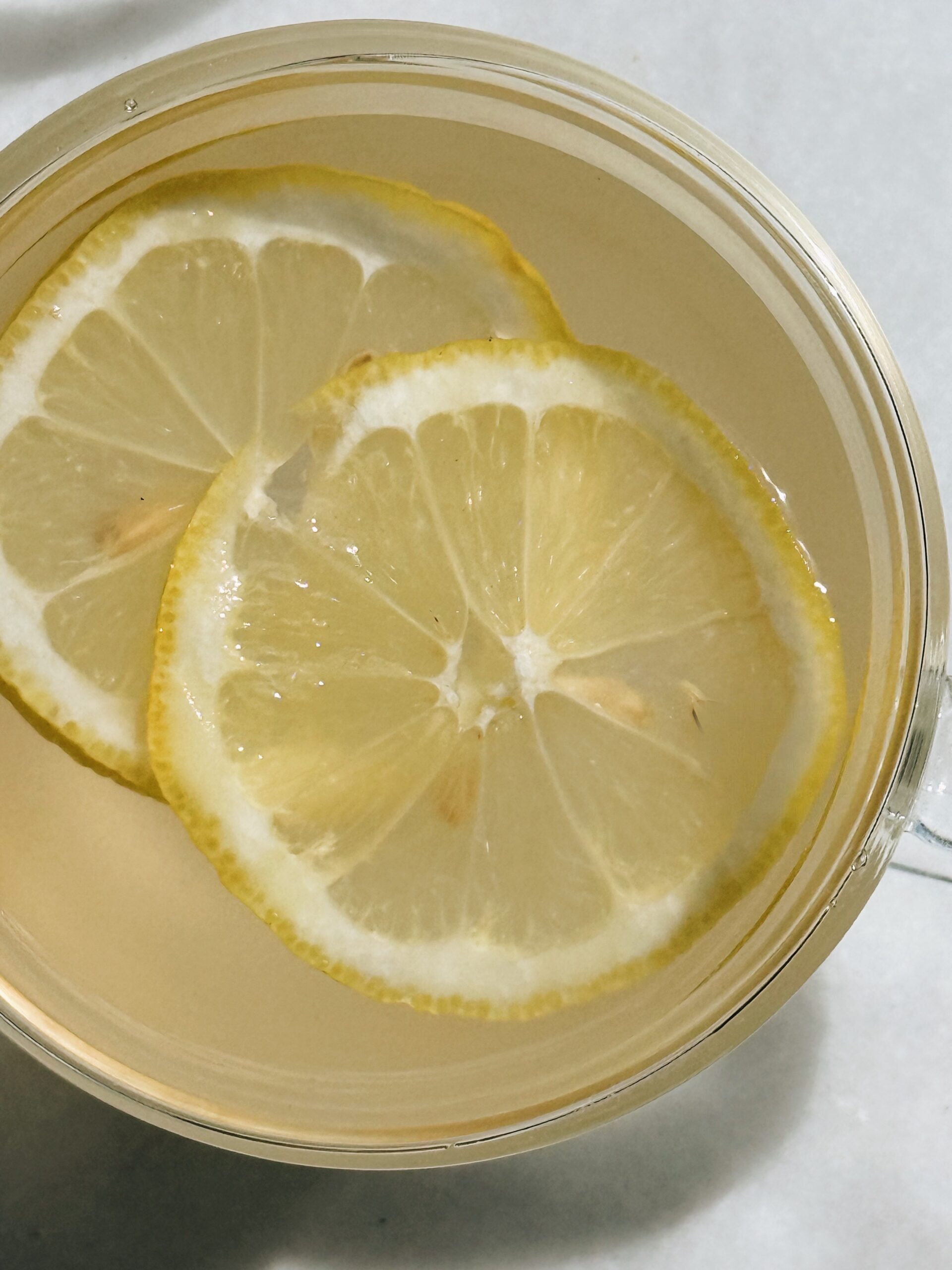
- Lemon brings brightness and a hit of vitamin C, but its real Ayurvedic contribution is its sour taste, which is itself digestive and appetite-stimulating. A squeeze of lemon makes ginger tea more effective as a pre-meal digestive tonic, and it’s particularly useful when you’re fighting a cold — the astringency helps cut through mucus and soothes the throat, clearing Kapha on the spot.
- Honey is an incredible ally for Kapha. So effective in helping to balance the digestive system and eliminate this sticky, congestive bioenergy that we recommend it to diabetics (since many cases of diabetes are metabolic conditions before they are endocrine conditions…) BUT, it’s important that we pause here.In Ayurveda, honey is considered deeply medicinal — but only when used correctly. The key rule: never heat honey above 150°F/65°C. When honey is added to boiling water or cooked, it becomes difficult to digest and is said to contribute to ama rather than clear it. So if you’re adding honey to your ginger tea, let the tea cool to a comfortable drinking temperature first — warm, not hot — and stir it in then. This isn’t a wellness-blog caveat; it’s a foundational principle I take seriously in my practice. Used this way, honey adds a gentle sweetness and its own antimicrobial, throat-coating benefits — especially lovely when you’re under the weather.
How I use this Magic Ginger Tea
There are so many times that I reach for this “recipe,”
Morning: a cup before breakfast to wake up digestion before the first meal.
Midday/Evening: if lunch feels heavy or digestion is slow, I enjoy a cup with my meal or afterwards.
Under the weather: at the first sign of a cold, I’ll sip on this through the day. I make a diluted version for my son that helps him kick colds quick!
Travel: I bring ginger powder everywhere. Hot water is available almost anywhere. This tea requires nothing else. And I enjoy strong digestion and no bloating as I bounce around the globe.
On reset: I use it as a digestive boost to help clear what my body is processing.
The ratio shared below is forgiving — start with ¼ teaspoon of ginger powder per cup and adjust from there. More ginger = more heat, more intensity. Find your level. See the Recipe Notes for more guidance.
Oops, Looks Like You're Not a Member!
That's ok, just sign up or log in to see this recipe.