
Imma shoot straight. If the Rishis sat down to a holiday dinner in the West, they would absolutely scoff at the presence of a salad on the table because salad, particularly this Roasted Orchard, Field + Vine Salad, breaks so many of their classical rules.
First, it puts fruit with cheese, and we never want to eat fruits with other foods.
Second, it serves raw leaves as the days get cold and dark.
Those are two things Ayurveda usually asks us to set aside this time of year.
But I make it during the holidays anyway, when we’re setting the table with warmth, light and bounty. When I’m gathering my people together. When I want to finish the meal on a light, clean note.
Because it brings me joy. And because one of the reasons I practice Ayurveda year-round, 80% of the time, is so that I can really dive in and indulge in the other 20%.
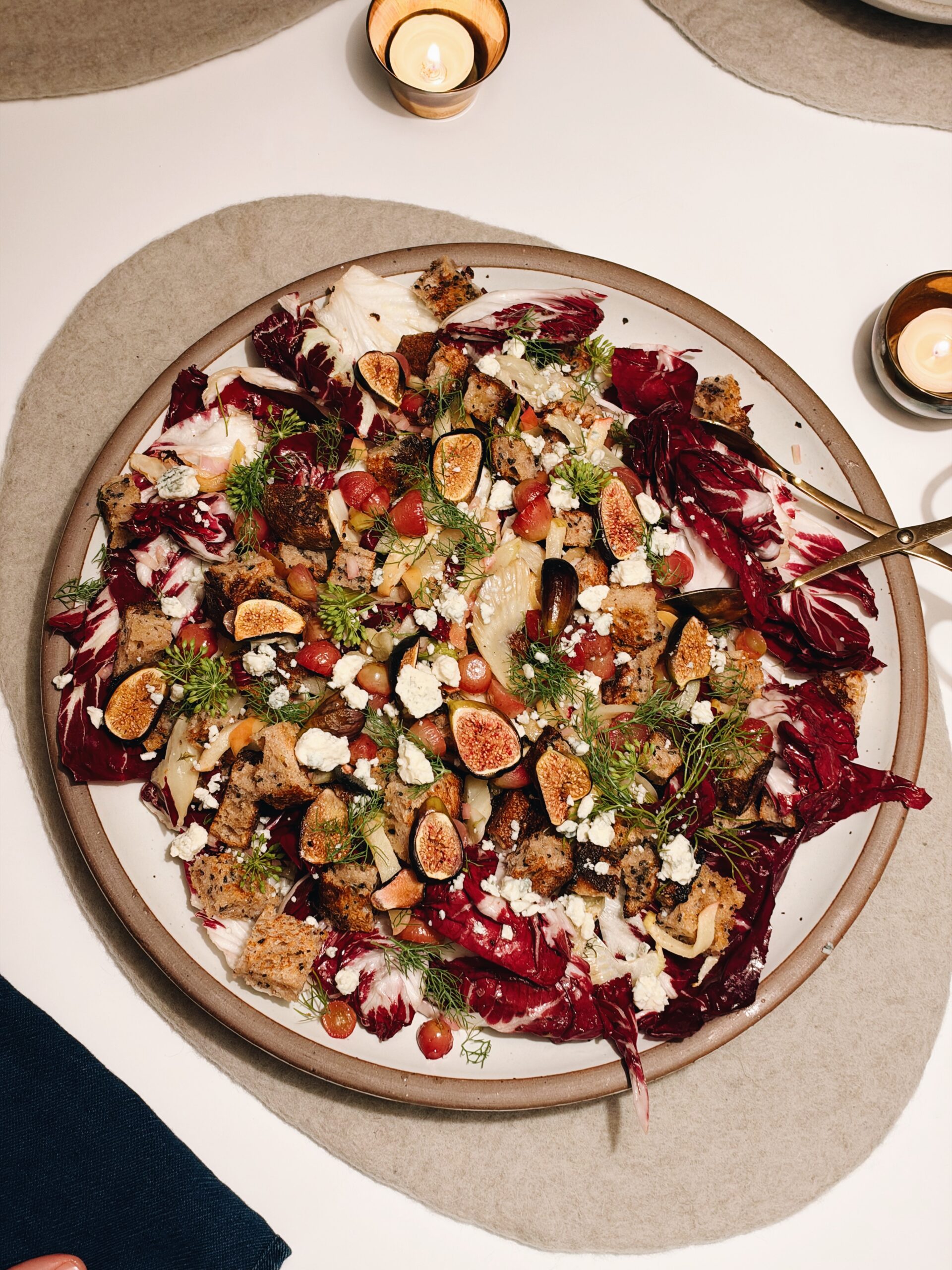
Fruit with dairy. Ayurveda counts fruit and dairy as an incompatible pairing, or viruddha ahara. Fruit is light and digests quickly. Dairy is heavy and slow. Eaten together they ask digestion to work at two speeds at once, and what doesn’t fully digest lingers as ama or undigested toxin. On a modern note, eating this combination also means that the fruit starts to ferment in the stomach, which impacts the pH of the digestive system as it moves through the digestive tract, making for a less hospitable environment for our microbiome.
The classic offender is fresh fruit with milk or yogurt (I’m looking at you my parfait people!) Aged, salty cheese is a gentler case, but apples, grapes and blue cheese on one plate still fall into this category.
Raw vegetables in the cold season. Raw food is cold, rough and light, which are the same qualities as vata and the late-autumn air. When agni or digestive fire is already working to keep us warm, a big bowl of raw greens can leave us bloated, chilled and unsettled. Cooked, warm, oily food is the usual advice from now until spring.
So what is this salad doing on a holiday table?
Holiday food is wonderful, and almost all of it is sweet, heavy, oily and dense: roasts, gravies, buttery potatoes, stuffing, pie. Those are kapha’s qualities, and they come at us all at once, for days in a row during the holiday season. By the second plate, most of us know how it feels: full, slow, foggy, ready for a nap we didn’t plan.
This salad is the counterweight.
At an ordinary weeknight dinner, I’d make different choices. After a holiday plate, these qualities are exactly what’s missing.
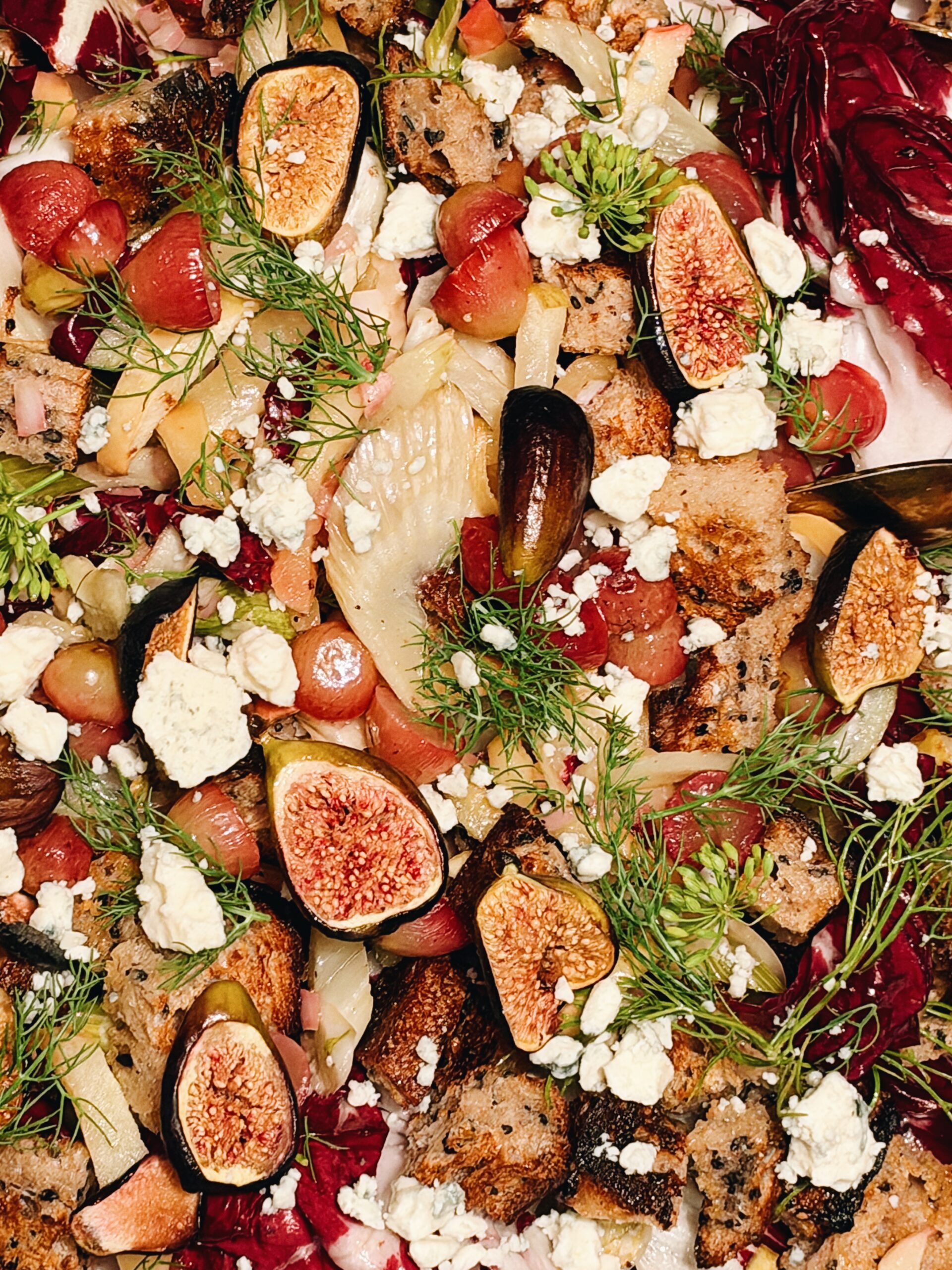
Most of us grew up eating salad first. It’s how restaurants are set up: bread, salad, then the main event. Ayurveda reverses that order (so do the Italians, and the French!) and once you understand why, it’s hard to go back.
Think of a meal the way you’d think of a house. You don’t start with the windows. You pour a foundation first, and then you build on it.
The classical guidance is to begin a meal with the heavy, sweet and grounding foods, when hunger is strongest and agni is most ready to work. The sour and salty foods come next, and the light, pungent, bitter and astringent foods come last. Sweet taste is made of earth and water, so it’s dense, stable and nourishing. That’s the foundation. Bitter and astringent are built from air, space and a little earth. They’re light, drying and clarifying, and that’s why they make a good roof and a poor foundation.
Raw salad is mostly air and water: crisp leaves full of space and juice. That’s lovely as a finish. But when you build a meal on a salad, you’re centering your nourishment on air and water. You fill up on something that won’t hold you, your digestion gets a cold, rough start, and the heavier food that follows lands on a fire that has already been dampened. Many people feel hungry again an hour later, or bloated and unsettled, without knowing why.
Eaten last, a salad does something quite different. The bitter and astringent tastes tell the body the meal is over. Astringent taste in particular is contracting and drying, and it gently closes the door on digestion. The bitterness clears the palate and helps cut the heaviness of everything that came before. You leave the table nourished, grounded by the foundation and lightened by the finish.
Some European tables have kept this order: the French traditionally serve their green salad after the main course. Ayurveda just tells us why it works.
So when you serve this salad, bring it out after the plates of turkey and potatoes have been passed around. Let it be the last thing on the fork.
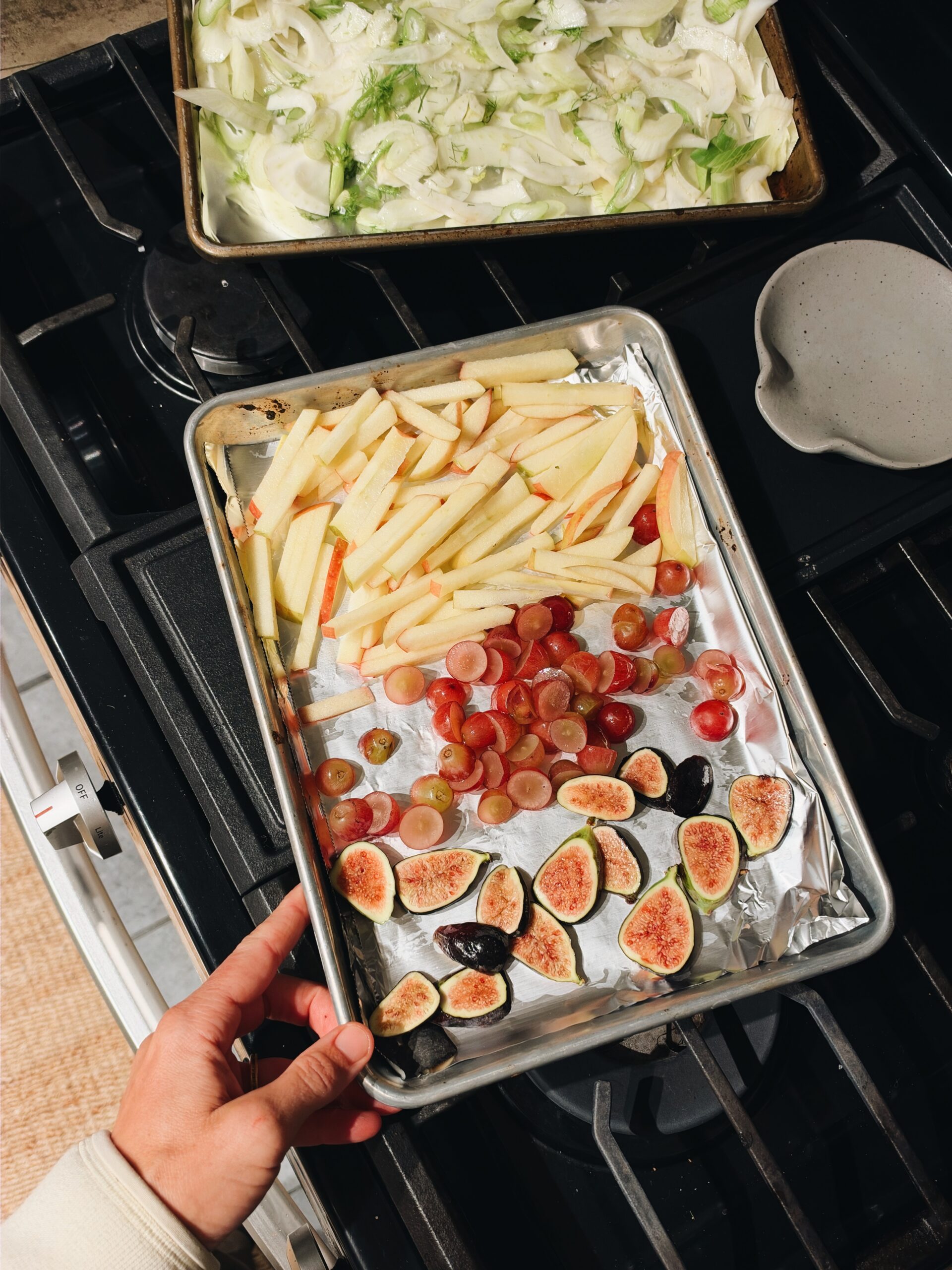
Bending a rule doesn’t mean ignoring it. Every choice in this recipe pulls the salad back toward balance.
And, honestly, roasting is where the flavor is. The fennel turns sweet and silky, the apple slices soften and caramelize at the edges, and the grapes collapse into little jammy pockets. Against bitter radicchio and sharp blue cheese, it tastes like an entire cheeseboard in one bite.
Having a salad at my holiday table is a staple, and this one is a favorite. It’s crispy, creamy, punchy, sour and bracing, and a little bit sweet too. It reminds me of all the best parts of a cheeseboard, but served up in a bowl!
I hope that the guidelines above help you bring salads to your holiday tables, and even your winter meals with a little more presence, joy and enjoyment!
I don’t think of Ayurveda as a list of things we’re never allowed to eat. I think of it as a way of seeing what a food brings, what the moment needs and how to close the gap between the two. Sometimes that means following the rule exactly. Sometimes it means bending it with your eyes open and doing the small things that make the bend gentle.
That's ok, just sign up or log in to see this recipe.