
Every once in a while, when I’m pushing hard, or after I’ve done something big in the mountains or on my bike, when I return home from a big travel day, there’s nothing I want to eat more than a burger. It’s SO GOOD. It feels so good, and there’s a really good reason for that besides just that the place I love to go has great fries.
Maybe you feel the same. You just crushed a long run, a heavy lift day, or six hours on your feet, and someone hands you a burger. Is that recovery or is that a mistake? The honest answer is: IT DEPENDS. It depends entirely on *which* burger ends up on your plate.
To be clear, there are SO.MANY.WAYS to make a “burger,” all of them delicious, but not all of them beneficial to all of us. Said another way, each of us has a unique bioenergetic imprint. Which means that each of us has a burger that will suit us best, and, just like pants, someone else’s worn in pants aren’t going to fit you and your needs very well.
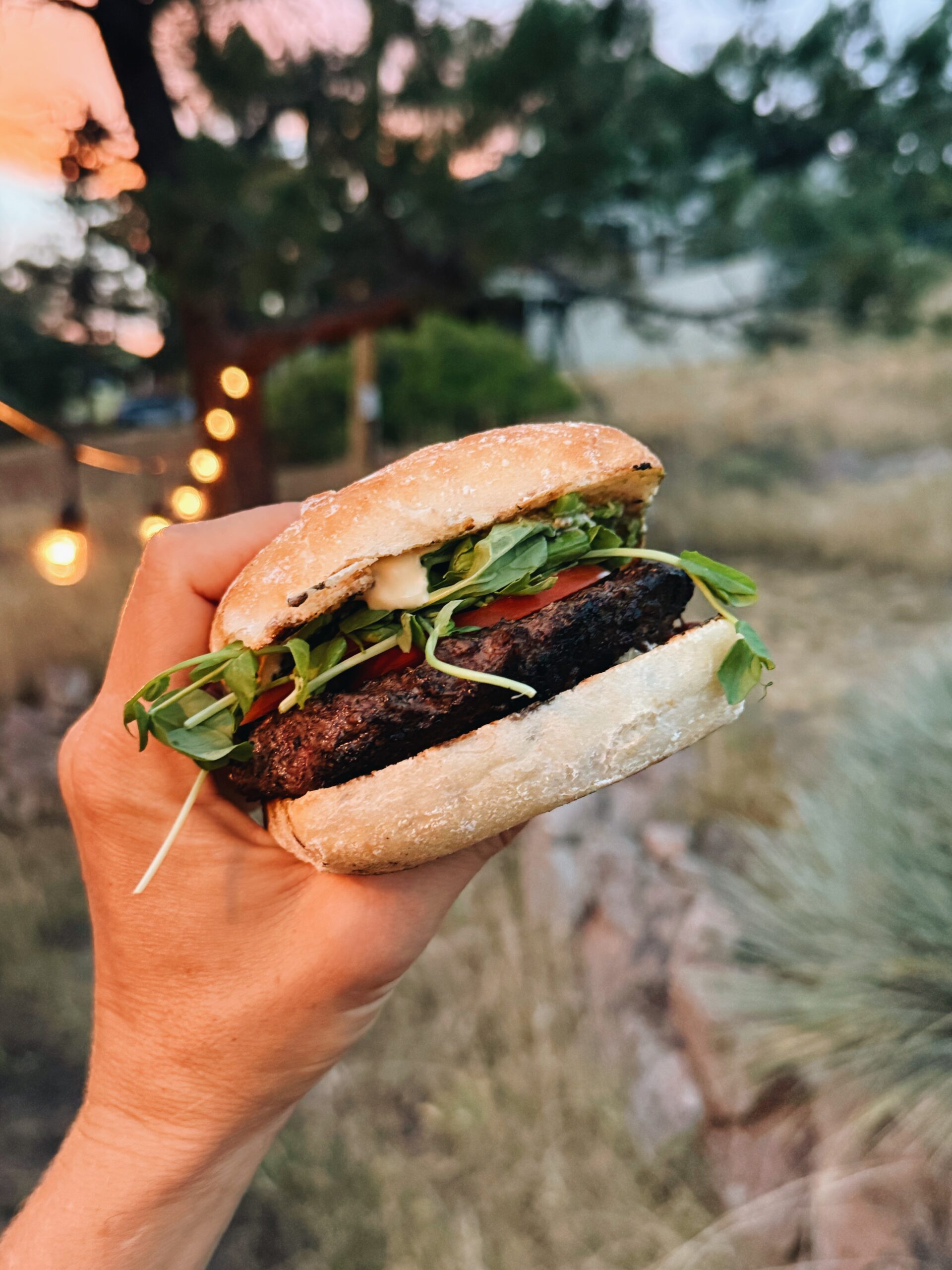
When I say there are many ways to make a burger, I’m not just talking about all beef patties and a whole lotta garnish options. To make an Ayurvedic burger isn’t really like bellying up to a “burger bar.” To make a burger that suits your needs – I mean REALLY suits your body, your digestion, your energetic imprint – we have to look at so much more. The doshas have different needs and strengths in terms of moisture, digestibility, fat, and thermogenesis (or, how much heat is generated when digested.)
Change the garnish and you’ve made a burger with a different taste. Change the moisture, density, fat, and thermogenic load, and you’ve made a burger that actually amplifies the energy of the being that consumed it. (No NY Times recipe can say that!)
Before I potentially burn you on burgers, let me say: eating a burger that isn’t aligned with your dosha doesn’t mean you’re doing it wrong. SOMETIMES YOU JUST NEED A BURGER WITHOUT COMPLICATIONS. But in my experience, and in my clients experience, it’s immensely helpful to use foods we commonly eat and crave to showcase the ways that the doshas move and interact in our bodies. Burgers are a perfectly lovely example of this. And, on those burger nights when you’re wanting to stay balanced and aligned and still enjoy, the recipes are there for you.
Let’s dive into A Burger for Every Dosha and talk about what makes a great burger for each, from the protein up to the bun.
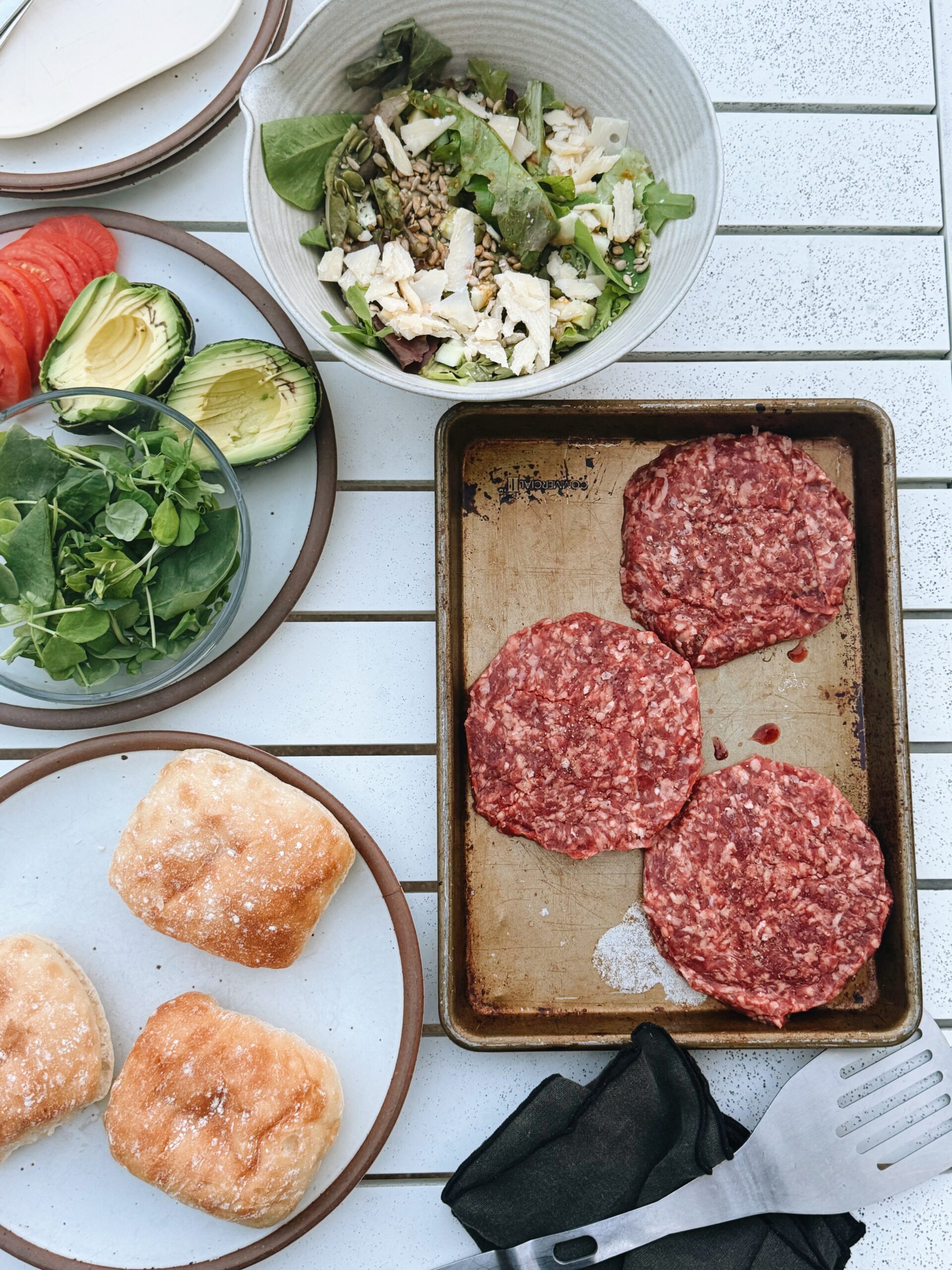
Vata dosha is dry, light, and cold by nature, and a burger built for Vata has to counter all three with the opposite qualities of moist, dense and warm. Sounds easy for a burger, right?
In practice, that means a fattier protein is required, one that doesn’t need help staying moist, cooked low and slow instead of hard and fast, in ghee instead of a dry sear. It means a soft, buttered bun instead of a crisp-toasted one — dry, crunchy bread is a small thing that adds up against a dosha that’s already starved for unctuousness. It means cooked, sweet toppings instead of raw, cold ones. For an active Vata-leaning person, this is the burger that actually rebuilds you after depletion — the one where “heavy” is the entire point, not something to apologize for.
When you read the description above, you *likely* get the vision of a pretty traditional burger and that’s because, a traditional burger, made with beef, a soft bun, topped with ketchup and mayo and maybe even a pickle, tomato slice and little sweep of lettuce IS quite nearly a perfect Vata reducing food. Vata dosha is the only bioenergy that will reap benefit from eating a beef-based burger; Pitta and Kapha doshas will find this protein source to be too heavy, dense and fatty but these are all qualities that Vata requires to stay balanced.
A couple additional nuances: we want your burger cooked in ghee (not oil or butter) because it’s the most digestible and balancing fat on the planet. And Vata needs that dense, nourishing grounding. We want the patty made with warming spices that help digestive fire to stay hot and productive while processing a big burger. From a bun perspective, something like a brioche or a potato bun are best, and sautéeing onions and greens (instead of raw) is the way to max the Vata balance. That said, as a disclaimer, I notice that I crave burgers most after a big effort and I find that having a couple pieces of lettuce and tomato and avocado on top are The Ultimate Ticket for my body. You might feel the same even if the Ayurvedic texts say differently.
If you’re a Vata type, or have a Vata elevation and you’re thinking that this is your queue to simply eat your standard burger and call it Ayurvedically aligned, a note of caution. Adding bacon, or cheese, cooking in butter, or olive oil, or enjoying with an abundance of raw onion, tomato or lettuce are enough to push your burger out of balance for you. These foods make your burger too challenging to digest (cheese and bacon) and add too much coldness and roughness (raw veg.)
A Pitta burger is a completely different beast. Pitta is already hot, already sharp, already prone to overproducing heat in the body, especially if we’re active and are generating heat in our activities.
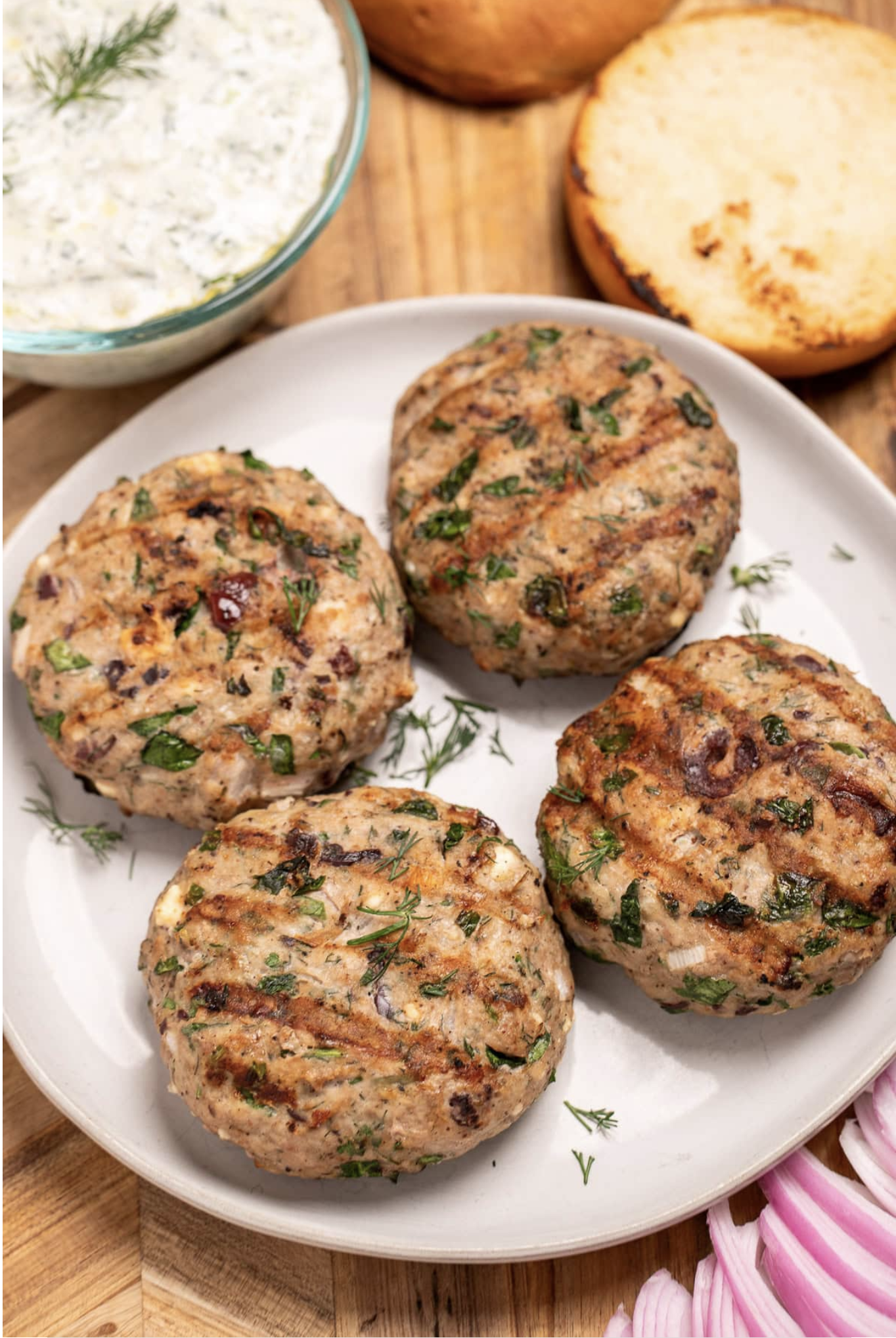
A “traditional burger” is hot, and thermogenically heating because of the fat content that beef and animal proteins contain. Eating a Vata burger in a Pitta body is sure to bring a low level of inflammation to the gut (because Pitta can’t handle the over abundance of heat from a fattier protein source,) not to mention if there’s mustard or other raw ingredients involved (onions, etc.) Adding a bitter or cooling garnish to a beef burger won’t cut it here. A protein that’s seared hard, abundant with char and raw onion or alliums is simply too hot to handle for Pitta, and that heat quality can override a cooling taste (rasa) sitting right next to it on the plate. Instead, a Pitta burger uses a leaner protein, gets pulled from the pan before any real char forms, and in the recipe below, I swap raw onion or tomato for a cucumber-yogurt sauce that helps with the cooling.
If you’re training hard, a Pitta constitution or working with abundant inflammation, avoiding a traditional burger will serve you best. Instead, a turkey burger made with cooling spices on a whole-grain bun, with tender lettuce will serve you best.
As for sweet Kapha, it’s the one dosha that doesn’t really need a burger at all.
Particularly a conventional one made with beef, and comes with fries. These are both big no-no’s for balancing kKpha and keeping it in check. The reason being that Kapha’s qualities are heavy, oily and dense, and (as we discussed above) what makes a burger medicinal ARE the heavy, dense and oily qualities of this food. Kapha doesn’t need warming spice as a garnish — it needs the entire dish to be lighter, drier, and more stimulating than a burger usually is.
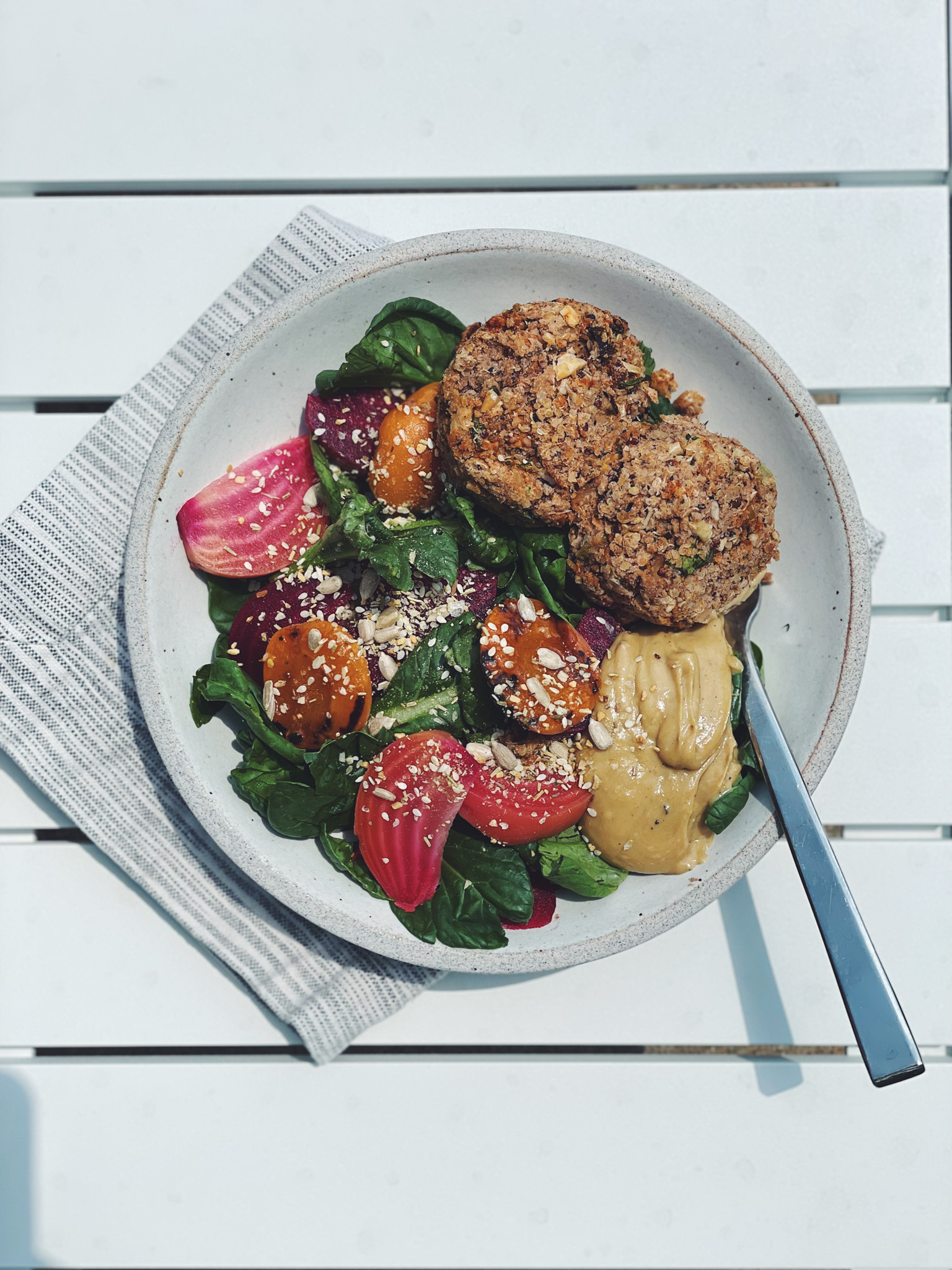
What does this mean? That means a lean protein, dry-formed patty cooked hot and fast with minimal oil, definitely no melted cheese, no soft heavy bun (and better, no bun at all), and toppings that are bitter, pungent, and a little confrontational — mustard greens, pickled onion, ginger-chili chutney. That’s right: a “traditional burger” and “kapha-supportive burger” are two completely different foods that you might not even recognize on a plate.
I’m not going to pretend a bunless, dry-grilled patty with mustard greens is what most people picture when they hear the word. But this “burger” is delicious, and is extremely balancing to Kapha which – in my experience – feels a lot better for Kapha than a big burger does anyway.
This burger is one made with plant-based protein, prefereably served without a bun, spiced up with a warming sauce, and served with a warm salad.
A burger isn’t automatically recovery food just because it’s high-protein, and it isn’t automatically a mistake just because it’s rich. The medicinal properties of a burger (YES THATS A THING) depend entirely on whether its moisture, density, fat, and heat match what your body is asking for that day, and your constitutional tendancy at large. Most of the time, the “burger is bad for you” and “burger is great post-workout” camps are both partially right — they’re just talking about different burgers for different people.
In the notes below, I share some more general recommendations for these burgers, as well as some additional protein and bun options for Kapha and a superfast way to make pickled beets and onions yours.
I can’t reiterate enough that none of this means you can’t or shouldn’t go order up a burger from your favorite joint and ENJOY it. And, I hope that when you do, you think about all the ways that this craveable, delicious food is deeply benefitting your body, and embracing where it might not, which opens the doors to other foods and ways you can balance your body when you notice that something shifts (and, you will.)
Enjoy these burgers, and this deeper peek into the interworking of Ayurvedic nutrition, my friends!
That's ok, just sign up or log in to see this recipe.