
I’ve kinda given up on winter altogether this year. Without snow, in any amount, the rough, blustery, dry and brown-ness of this specific season has not felt like winter much at all. And this week, with temperatures up into the 60’s and seeing flowers bloom all over town, it seemed like I would be better served turning my attention away from the window, waiting for the snow to fall, and start really acknowledging what’s going on in body/mind/spirit. And that’s where this Circus + Fennel Salad w/Toasted Coriander Vinaigrette comes in.
I’ve been craving citrus in all forms the past few weeks, and it tracks. Through the winter and spring months, the times of year when Vata and Kapha doshas are highest, citrus fruits step up and help to balance Vata and reduce Kapha by cutting through heaviness and stagnation with their sourness, and stimulating movement and metabolism.
This colorful, fresh, uplifting dish is what we’re all craving from the grey-brown hills these days. And no matter where we are, it’s what our winter-weary beings are cravings too. This might look like “just another creative salad,” but it’s a real late-winter-to-spring support. This is no shallow salad, this stunner has layers on layers of depth and benefit for us.
As spring arrives, this salad is how the LIGHT gets in.

…are a match made in late-winter heaven!
Fennel is one of those ingredients that works beautifully across constitutions, but it really shines as a late-winter-into-spring choice. It’s tridoshic in most preparations, with a particular affinity for calming Vata and Pitta while gently clearing Kapha accumulation — which is exactly what we’re working with in this seasonal transition where the winter has been too warm, the weather too windy, and the Earth too dry. Kapha is overflowing in our bodies as they struggle to stay supple. Its volatile oils (primarily anethole) are deeply carminative, meaning it addresses the kind of sluggish, heavy digestion that tends to build up over winter. It also has a mild diuretic quality that helps the body release excess water retention, which is classic Kapha territory.
Citrus brings a bright, penetrating quality — what Ayurveda describes as the sour taste (amla rasa). Foods with the sour taste kindle agni beautifully, stimulate salivation and digestive enzymes, and have a scraping, clarifying effect on accumulated ama (metabolic waste). The light, sharp, mobile qualities of citrus are essentially the energetic opposite of the heavy, dull, static qualities that have built up through winter — so it’s a really intelligent seasonal pairing. The vitamin C content also supports the liver’s natural detoxification processes, which aligns with the Ayurvedic understanding of spring as prime time for gently supporting the liver and lymph.
Together, this salad is doing something deeply coherent from an Ayurvedic lens: it’s kindling agni, scraping ama, moving Kapha, and introducing lightness and brightness after months of heavier, warming foods.
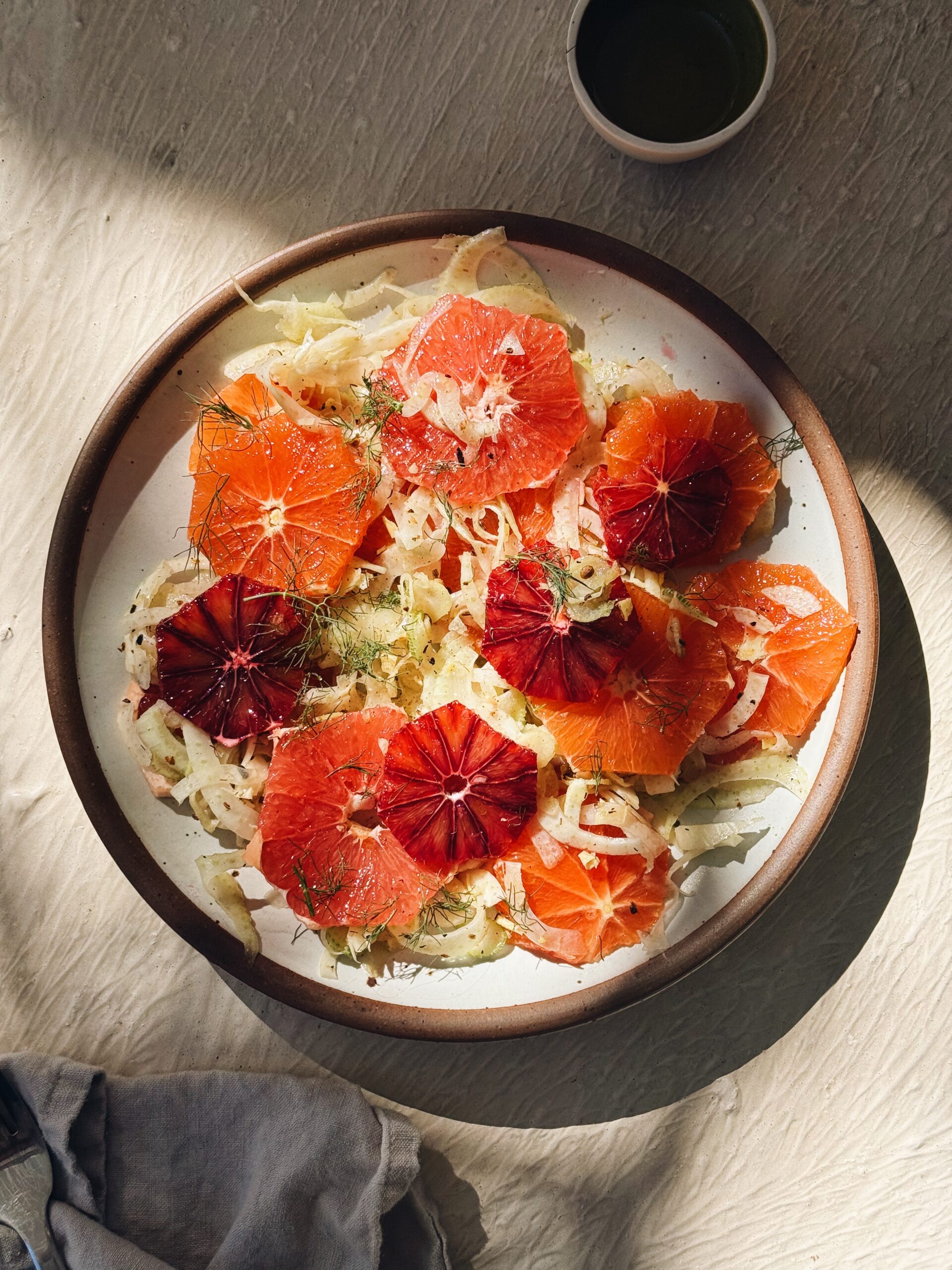
The toasted fennel and coriander seeds in the dressing are doing real digestive work here — they transform what could otherwise easily become a purely cooling, Kapha-aggravating salad into something much more agni-supportive. The ginger and black pepper add a gentle penetrating quality that helps the body actually absorb the nutrients rather than just moving them through.
Though they’re some of the smallest ingredients here, and anywhere they’re used, spices are also some of the most potent and valuable ingredients in the kitchen because they help to make the nutrients in our foods bioavailable, lighten and lift anything they touch and help our digestive systems warm and light.
Ayurveda is quite specific that citrus is best consumed at certain times — midday when agni is strongest, or as a pre-meal digestive stimulant in small amounts. Eating large amounts of cold citrus on an empty stomach first thing in the morning is actually considered disruptive for many constitutions, despite being popular wellness advice. (That means cold orange juice to wake your body is a no-no.) Warming citrus slightly, pairing it with warming spices like ginger and black pepper (as in this toasted coriander vinaigrette), or combining it with healthy fats significantly changes its effect on the body — making it more bioavailable and easier to digest.
Enjoy this salad at room temperature, for lunch, and exponentially benefit from the bounty.
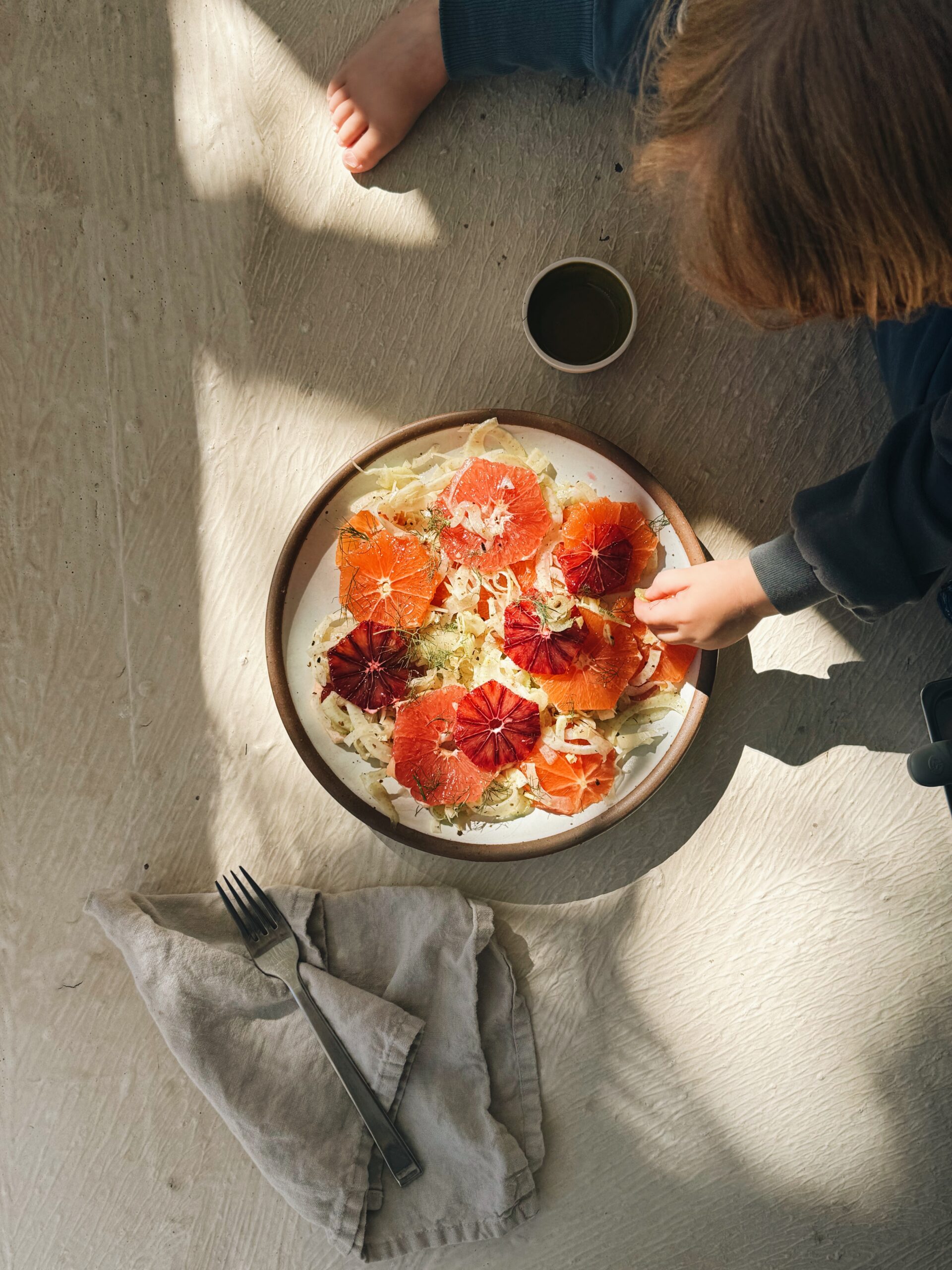
When I say that this salad “let’s the light in” I really mean it. On every level, this beautiful salad is lightening the body, allowing it to spring forward with strength, clarity and ease.
Letting the fennel marinate briefly is a small but meaningful step — it breaks down some of the raw, heavy quality without losing the brightness. And ultimately makes this salad bioavailable too.
The raw preparation is worth noting — raw foods can aggravate Vata, but this light toasted coriander dressing with warming elements like ginger, black pepper, and a good olive oil to buffer that raw rough quality and keep digestion supported. A small amount of salt also helps make raw vegetables more bioavailable.
This salad is perfect as a transition away from colder months with their heavy density, and into warmer months and serves as a seasonal transition dish — not a detox in the modern marketing sense, but as a genuinely intelligent, tradition-rooted way of asking the body to lighten, clarify, and move forward into spring.
It’s ridiculously quick to put together, which means it’s an excellent side dish served alongside something warm and grounding if you’re serving it as part of a larger meal — think a simple lentil soup or roasted root vegetables — so the meal as a whole stays balanced. But, the leftovers as a marinated salad are also excellent so definitely don’t cut the recipe in half; instead build it into a grain bowl or with a bit of fish or chicken and naan or chapati for lunch.
That's ok, just sign up or log in to see this recipe.