
Last week I ran the same trail twice in four days.
The first time, I was in a tank top by mile two, sweating through the kind of heat that still feels like July – sweaty, sultry, emptying.
The second time, I started shivering the second I stopped moving, and dug a wind layer out of my pack I hadn’t touched since April. Same trail. Same week. Two different seasons.
Turns out that this Jekyll-and-Hyde flip has a name. Ayurveda calls this stretch of early autumn sharad ritu — the space between the hottest moments of the year and the days they start to slip from us. And unlike the neat four-season calendar most of us grew up with, it treats this window as its own thing entirely. Not summer, not fall. The last of the heat still hanging around, the first of the dryness and wind just showing up to the party. Your body usually knows this shift is occuring before your brain catches up: skin that’s suddenly thirstier than it was a month ago, an appetite that can’t decide what it wants, energy that runs hot one afternoon and low the next. This In-Between Tea is medicine for this exact moment.
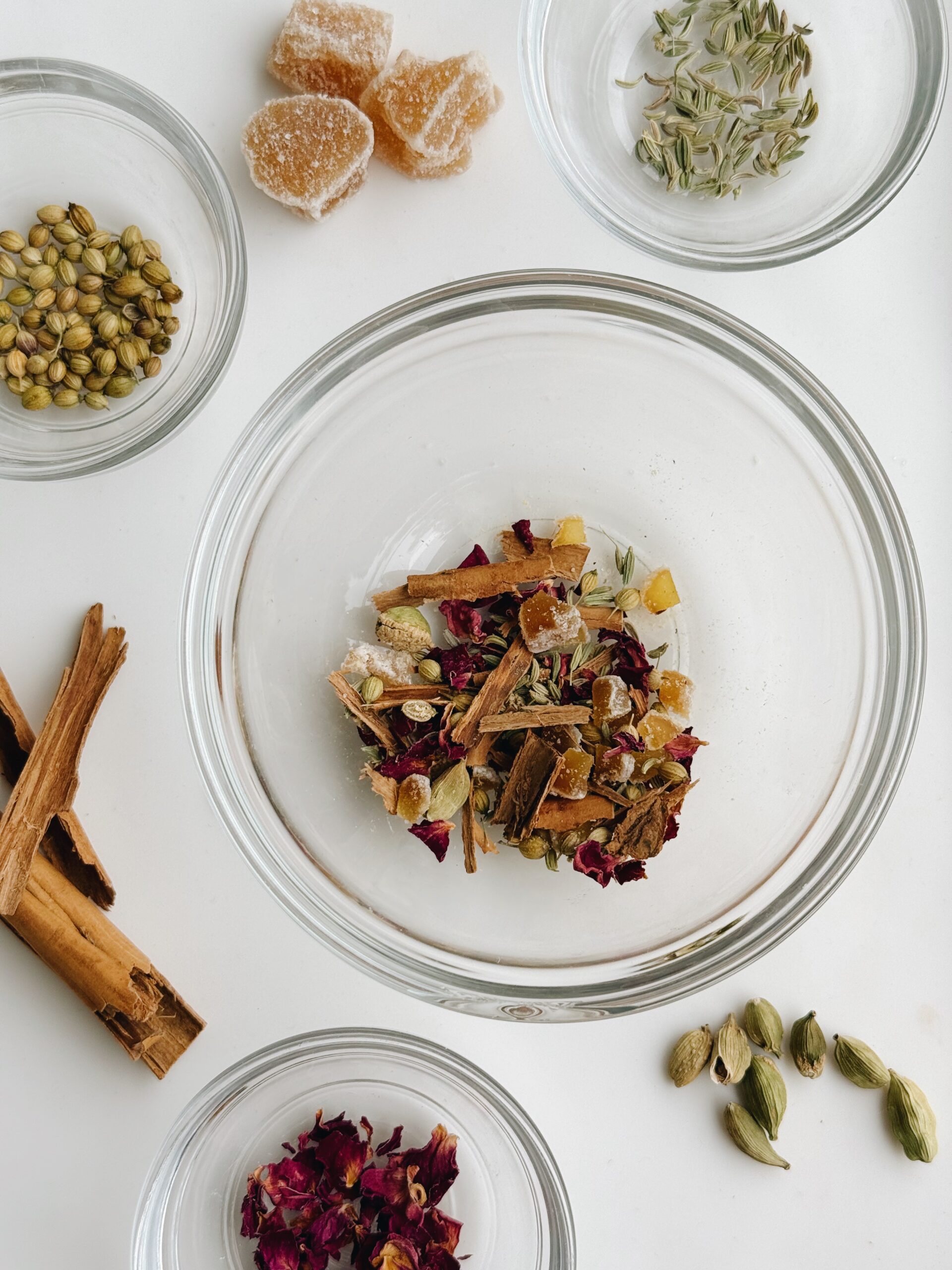
Regardless of whether I come home from my time in the mountains sweltering or shivering, I find that by afternoon, I want to put on cozy clothes, settle in and collect myself. This tea is for that — it’s a bridge, a tool, a chameleon comfort, a medicine for this moment and for all the in-between moments we experience this time of year. There’s something about the fall that just feels “swirlier” than the other times of the year – and that makes sense. We’re in the swirl of a season change, for certain, but we’re also laying over on our last trips of the fall, transiting between the last adventures before the weather cools, packing in the last good summer instincts before we become winter animals.
This tea is for the times when we’re not quite where we left, and not quite where we’re going.
The hour between a meal that’s finished and a hunger that hasn’t started yet.
The transit between destinations, when you need something warm to make a home wherever you are.
The 20-minutes after a hard workout, where your body isn’t sure if you’re still pushing or ready to rest (but your digestive system needs rekindling.)
Even the gap between waking up and actually being awake is a perfect place for this tea.
Anytime our digestion is in flux. And anywhere you’re standing in the doorway between one state and the next, this is a tea built for the threshold, not either room. Its a salve to help us straddle.
Imagine that your digestive fire is a candle you’re carrying from room to room. If you move too quickly, the flame burns out. But keep it steady, and you arrive in the light. We need our digestive fire to stay burning bright as we move between – seasons, sessions, places. And this tea is a steadying factor that helps us not to move too quickly, keeping the flame of our prowess bright. Drinking this warming, settling tea helps our digestive fire to settle and steady too. Which means that we can keep churning through all of the experiences, foods, emotions and everyday things that come of a season of movement and change.
“Couldn’t I say this about any cup of tea?” you might be asking. “Isn’t any pause in the swirl a nice spot for a pot of tea?”
YES. But (as you already know) not all teas are created equally.
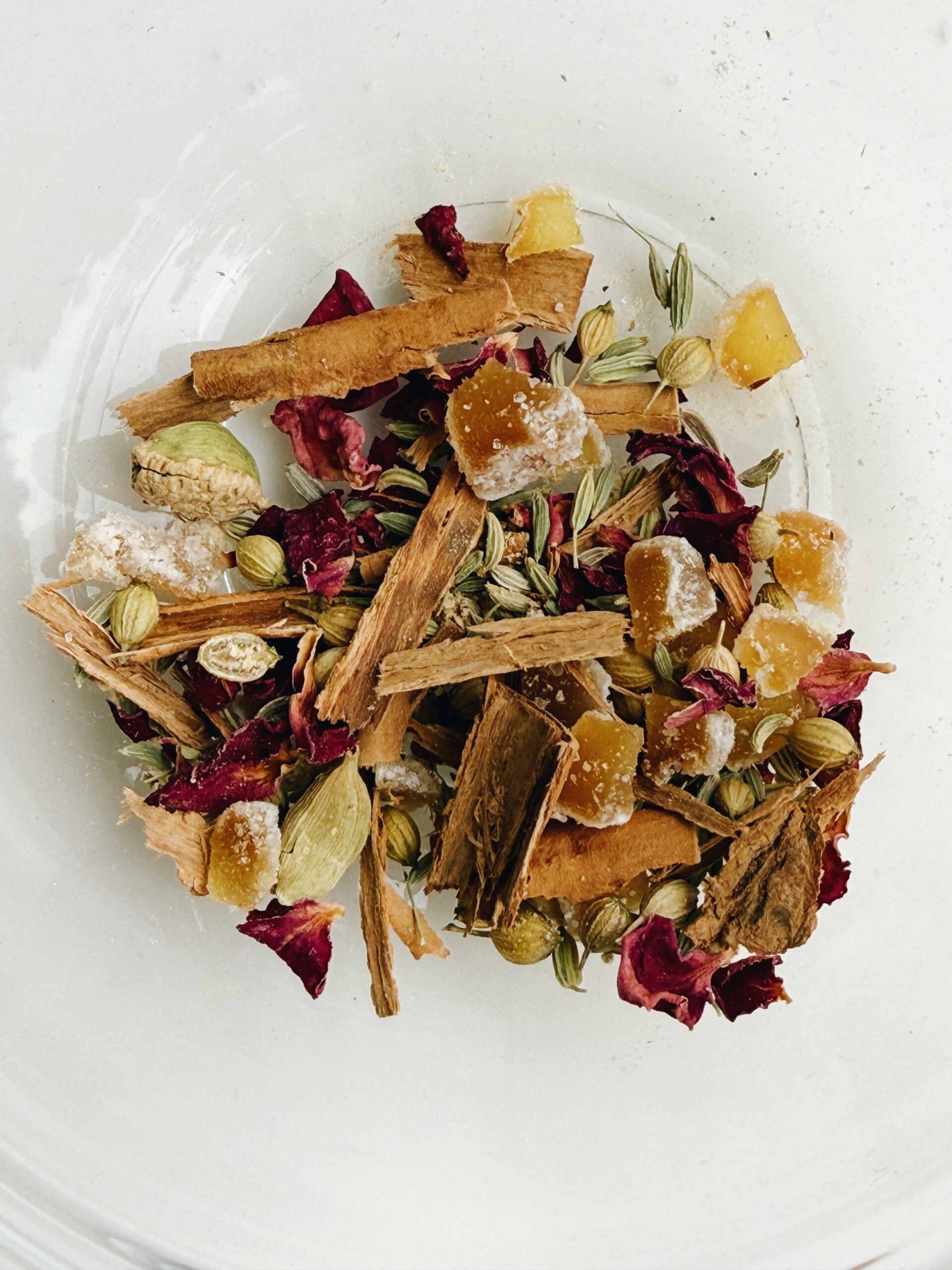
If you haven’t already been initiated into the incricacies of “tea,” let me welcome you. And, let me say that the way you brew a tea MATTERS. You might already recognize that the temperature of the water, and teh steeping time impact how the tea in your mug comes out. But there’s more to it than that. Many teas are steeped, specifically those with leaves and flowers. The reason for this is that – if boiled – the volatile, delicate essential oils in those leaves and flowers are destroyed. This makes cup of flavored water (though maybe not very delicious,) but it destroys the medicine in the ingredients. The ingredients in this tea are seeds, spices, roots and leaves and flowers. And in order to draw out the beneficial volatile oils in these ingredients, we have to gently simmer them. This is called a decoction – or a kwath.
Then we add the delicate flowers, When the tea comes off the heat, we allow the petals to steep creating an infusion — a phanta. The result is not just pretty or tasty water, it’s a medicine for whatever ails you, in a stretch of the year that can’t make up its mind.
The specific ingredients in this tea blend do the dialed balancing of pitta heat and vata cold; the energies that are brought by summer and fall respectively. Fennel and coriander keep digestion steady no matter which way the season is leaning. Cardamom, cinnamon, and a touch of ginger bring just enough warmth to start meeting the dryness on its way in. And rose does the quiet work of settling any leftover heat still sitting in the body from summer. We simmer them, then steep.
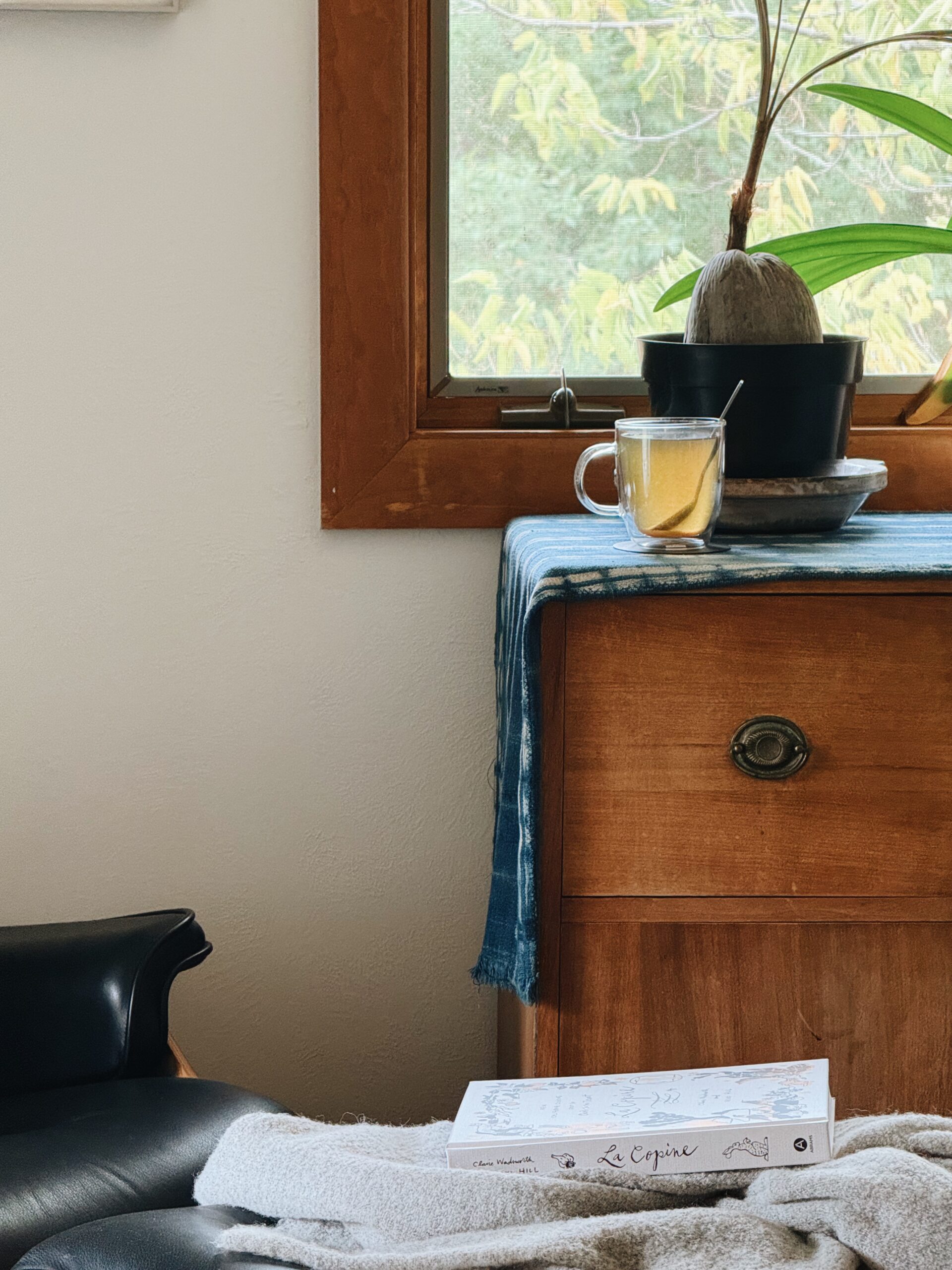
The medicine made is sweet, warm, spiced and comforting. I love it with a cookie for a snack, or with my breakfast in the morning on a chilly day.
The ingredients contain all of the Six Flavors, with the exception of salty and sour, but you could remedy this by adding a pinch of salt and a squeeze of lemon to your tea for a perfectly balancing and nourishing sip.
Make it by the cup when you want it once, or mix a jar and keep it on the counter through the whole transition — the recipe for both is above. Either way, it’s one of those teas that asks less than it gives: a few minutes at the stove, and a body that stops arguing with itself about what season it’s in.
That's ok, just sign up or log in to see this recipe.