
As the summer has been winding down, I’ve been seeing flapjacks (the traditional British treat? Snack?) pop up all over social media in the pockets of endurance athletes. Riders, runners and hikers are all adapting this classic to their needs. I was intrigued! So, I put a few of their recipes floating around the interwebs to the test. And let me tell you that these were SOME OF THE MOST HORRIBLE RIDE SNACKS I HAVE EVER HAD.
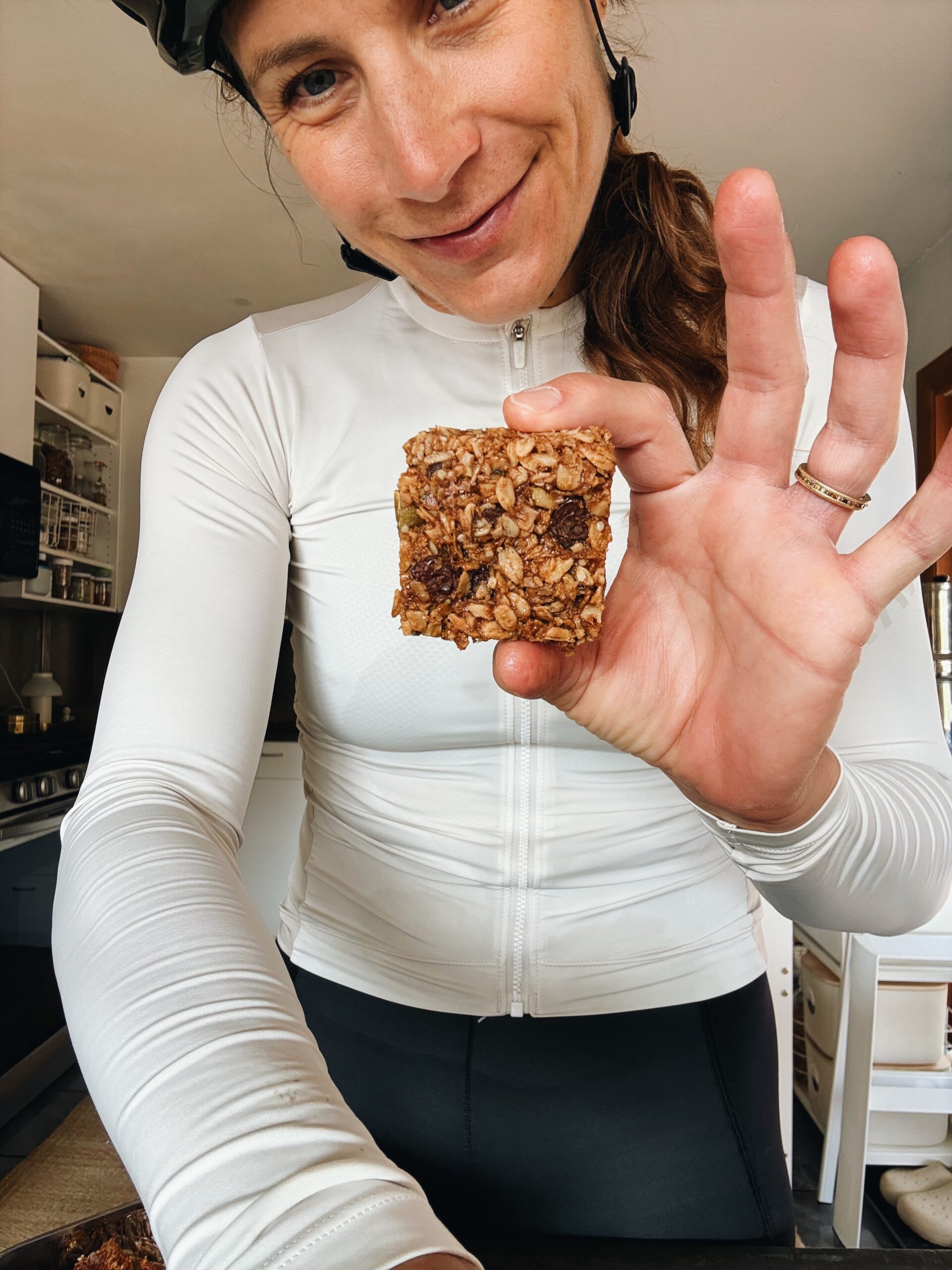
Cardboard, my friends. Straight up. No flavor. Lots of chewing. Maybe calories? And fiber? But no joy, and my belly hurt as I rode off the top of the mountain pass I had used to taste test them. For as hard as it was to get me to eat these “healthy flapjacks,” it was even harder for my body to digest them. I went back to the drawing board and I’m so happy to report that these chewy, caramely, PERFECT Maple-Butter Flapjacks are the delicious result.
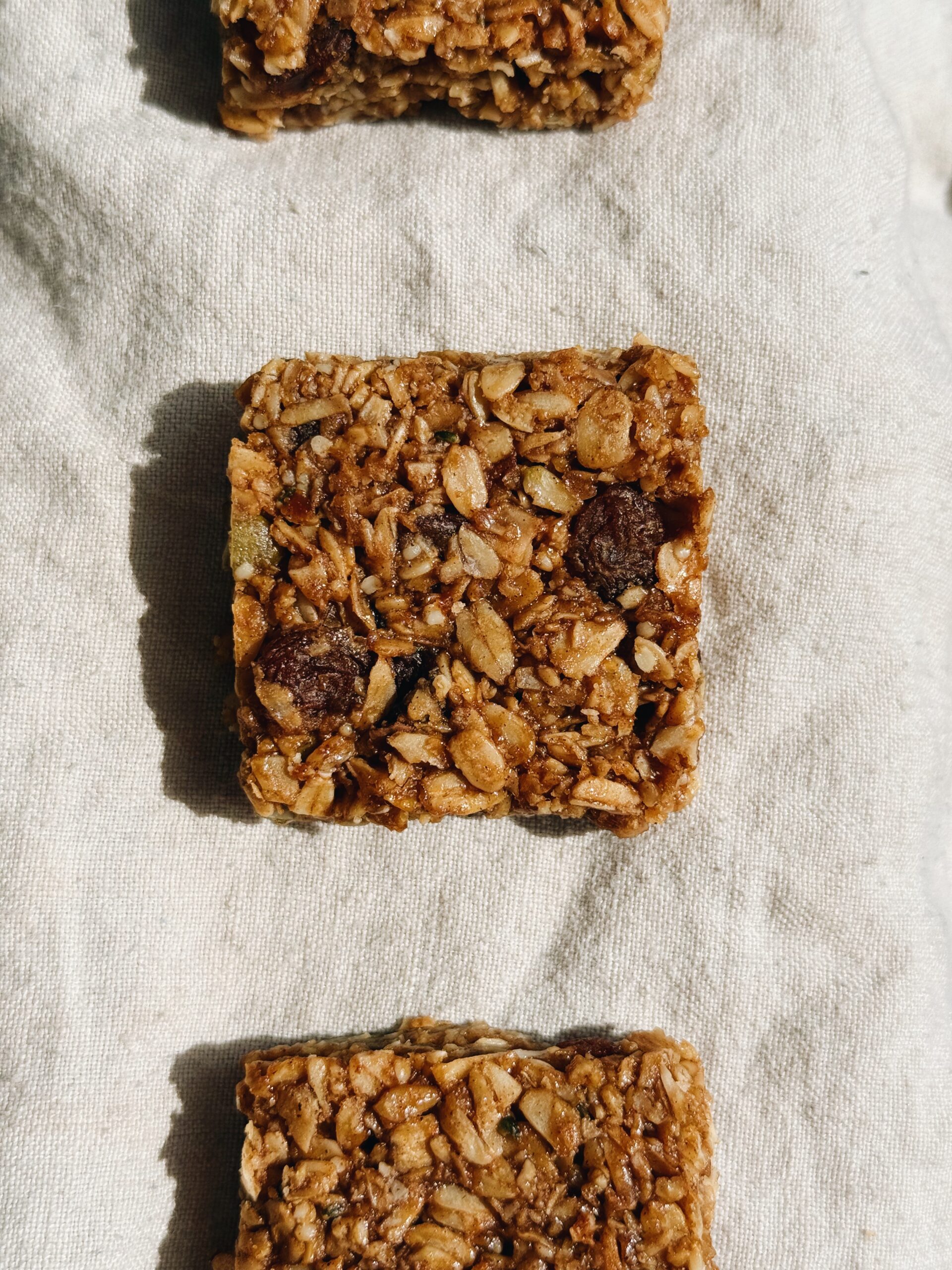
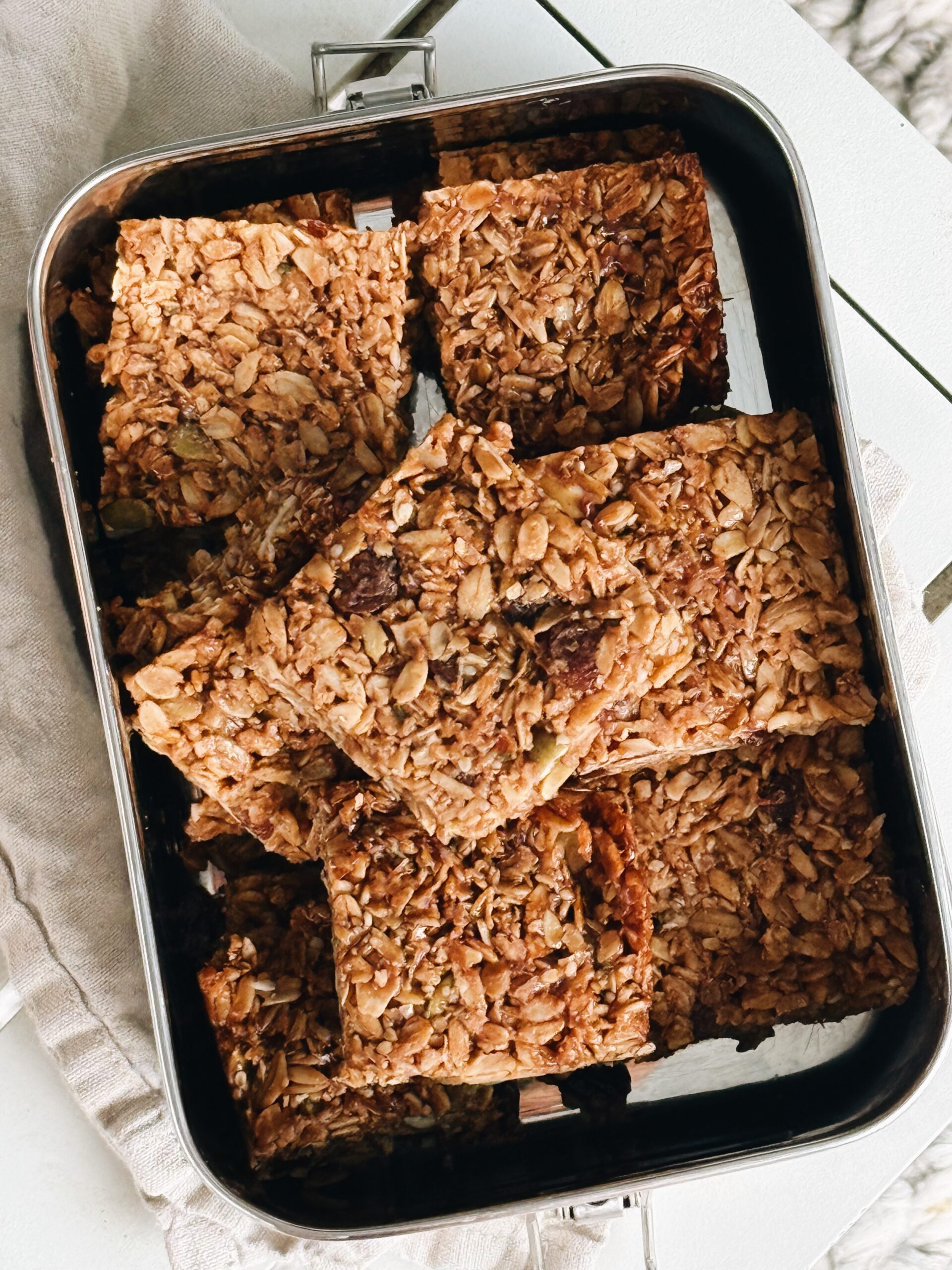
A flapjack, by definition, is a very decadent granola bar of English decent, that is incredibly simple to make. Butter, sugar, oats and golden syrup (an invert sugar that’s a lot like glucose syrup but tastes better) are combined and baked – sometimes with raisins. As far as ride foods, or endurance foods go, it kind of can’t get much better – your body slowly processes the oats, enjoys the glucose hit, and the flavor is bomb!
But these “healthified flapjacks” looked a lot different (though they all used oats) and ultimately they had three character flaws.
One, in lieu of fat, they used banana, applesauce, pumpkin…some kind of pureé. Hypothetically to lighten the caloric load of the finished flapjack? Not sure. But this is crime number one. Baked fruit pureé doesn’t taste like anything. Truly. Nothing.
Two, instead of golden syrup (which is a bit suspect as a health food – I concur) these recipes used honey. We NEVER want to bake honey, because it destroys the powerful enzymes that make it a super food. Not to mention that baking or boiling it renders it almost impossible to digest, from the perspecitve of Ayurveda. Huge hard no if we’re trying to make an energy food to eat and assimilate for performance.
And three, salt and spices were no where to be found. If fat isn’t present, and salt and spices are left out, then these flapjacks REALLY taste like nothing and sit like heavy, fiberous rocks in our stomachs while we ride/run. We are not joyfully fueling our efforts here. We are suffering through a big bite of cardboard. The saddest!
The good news is that there were some easy ways to fix these flaws, and this Maple-Butter Flapjack does just that.
When recovered from my big mountain descent, the belly ache from my “healthy flapjack experiements” and got into the kitchen, I knew exactly what I wanted to change.
In order for us to fuel properly, we need to enjoy our food. If it doesn’t taste good, or doesn’t feel good, we won’t eat it and we’ll be up the creek – undernourished and underperforming. I needed these flapjacks to taste GOOD, to feel good and be easy to digest, AND, I wanted them to have as much virtue as possible built in. There’s a place in my back pocket for a gas station rice crispy treat or a random donut, etc, but if it’s coming from my kitchen I want it to have whole, real foods I feel good about. This was a strikingly easy ask.
I brought back the fat. Because it’s so so important for us as athletes on the go this time of year, it’s helpful for digestion, and it made these bars DELICIOUS. I also switched up the sweetners, using maple and coconut sugar so that there were minerals and nutrients baked in (instead of empty calories) and the flavor would be decadent and undeniable. I added a few handfuls of nuts and seeds for crunch, some raisins, to be “proper,” and plenty of salt and spices to help the body taste and use the power in this little packable treat. You’re welcome!
Ghrita — clarified or whole butter — has long held a place in ayurvedic cooking as one of the great unctuous, grounding fats. Its guna is heavy and oily, its virya warming. In a season defined by dryness and mobility, that’s not indulgence, it’s correction for us as athletes. We’re going to continue right on making our own wind as the wind spins around us, and we have to balance with that oily, warming fat to keep our bodies health, strong and our digestive systems stable. Combined with oats — this ingredient makes the baked oats more digestible (uncooked oats are actually quite a digestive load on their own.) And THIS addition makes these bars appropriate MORE appropriate for athletes who care about assimilation and the superpower we get from it, not an ingredient to be avoided.
Honey shouldn’t be heated past roughly 40°C/104°F if you want to preserve its properties — beyond that, it’s not just a texture question like the maple syrup bubble, it’s a chemistry and ayurvedic-precaution issue together. Heated honey undergoes rapid formation of HMF (hydroxymethylfurfural), a compound that increases the hotter and longer honey is cooked, and modern research has raised toxicity concerns around it at higher concentrations. Ayurveda arrived at the same caution centuries earlier from a different angle: heated honey is classically described as turning from amrita (nectar, nourishing) toward virtually ama-generating and toxic — heat is said to alter its molecular structure into something the body can’t properly metabolize, becoming a source of ama (toxic buildup) rather than the medicine raw honey is prized as. That’s the reason honey gets stirred into a dish after it’s off the heat, not simmered into it — it’s one of the few ingredients where “just cook it a little” isn’t a texture tradeoff, it’s a different substance.
Maple syrup’s rasa is purely madhura rasa — sweet in flavor. That matters here: sweet taste builds tissue (it’s the primary rasa associated with building ojas) and calms both vata’s erraticism and, in smaller quantities, pitta’s heat – the two bioenergies that we’re provoking constantly as endurance athletes. Coconut sugar is one of the most easy to digest and cooling sugars we know, supportive for vata dosha and pitta fire at the same time.
Quick reminder: our bodies don’t recognize macros. They know FLAVORS. The bioenergetic benefits that our foods bring into the body are coded in flavor, and when the tongue tastes a flavor, it turns on mechanisms inside the body to help us break down and assimilate that food so it can benefit us. Specifically, foods of different flavors require different enzymes to break them down, so if. you body can’t taste the flavor of your food (ie: the cardboard) it doesn’t know what to do with it. And it sits, like a brick, in the stomach. Salt is the key to the body tasting flavors. It opens the taste buds and makes sure that those messages are coming through loud and clear! Adding salt to my flapjack recipe made sure that this one was coming in for a power food landing.
As for the spices, these were doing a little sneaky digestive work on the side. Spices like cinnamon, ginger and cardamom all help to boost digestion. For endurance athletes, whom are constantly diminishing digestive fire in our sport – this is really important so that we’re able to process and digest our foods on the go. If you’ve ever been bloated, or gassy, or just had a tummy ache on a run or a ride and been unable to figure out why, it wasn’t just the food — it was weak digestive fire trying to do the work of breaking down your food…but just not quite strong enough to handle the job.
This is the distinction worth sitting with. A quick-burning simple sugar — fruit juice, white sugar, a gel — spikes blood glucose fast and drops it fast, which is exactly what a short, hard effort wants: rapid fuel, rapid clearance. This bar doesn’t work that way. Oats bring slow-digesting complex carbohydrate. Butter’s fat slows gastric emptying further, stretching the release of that maple sweetness over a longer window instead of dumping it all at once. Seeds add a small protein and fat contribution that does the same thing. The net effect is steady, sustained energy release — not a spike-and-crash, but a long, even burn.
That’s precisely what long, low-to-moderate efforts need, and precisely what short, explosive efforts don’t. Save the fast sugar for the interval session. Save these flapjacts for the long run, the long day, the hours where you need your body fed evenly rather than fed hard.
Are the perfect fall adventure food. Chewy in the center, crunchy on the edges, scented like caramel and oh-so-satisfying. Decadent but smart. Grounding, and nourishing, and delicious. DELICIOUS!
You’ll have all of the ingredients you need already in your pantry I imagine, and if not, the grocery store can hook you up. You’ll just need a saucepan and a big bowl, and something to bake your flapjacks in. You’ll cook the maple-butter, pour it over the oats, and bake! That’s it!
One more important thing – you’re going to want a thermometer to check the temperature of your maple syrup/coconut sugar mixture. The reason is that – in order to get a perfectly chewy bar – you have to make sure that enough liquid has cooked out of the maple. It’s EASY to do this, and I promise that – it’s worth having a thermometer in your toolbox if you don’t already because you’ll be making these a LOT once you see how easy and perfect they are.
Happy snack packing! : )
That's ok, just sign up or log in to see this recipe.